Skip to content





Understanding the asphalt paving process helps Texas property owners make informed decisions about their driveways, parking lots, and roadway installations. The process involves multiple stages that ensure durability and longevity, especially important in our challenging climate. C. Brooks Paving has perfected this process over four generations of serving Bulverde TX, the Hill Country, and Central Texas.
Pre-Paving Assessment and Planning
Before any paving equipment arrives on site, professional paving contractors conduct thorough evaluations of your property. This critical step determines the scope of work, identifies potential challenges, and establishes a realistic timeline for your asphalt paving project.
Site inspection by experienced paving professionals reveals hidden issues that could compromise the new pavement. Poor water drainage, unstable foundation, or underground utilities must be addressed before the installation process begins. Texas properties often face unique challenges like expansive clay soils and intense heat exposure.
Step 1: Demolition and Removal
The first step in the asphalt paving process involves removing old asphalt, concrete, or damaged surfaces. Heavy machinery breaks up the existing pavement and hauls debris away from your property. This clean slate ensures your new asphalt has a solid foundation without interference from deteriorated layers underneath.
Key activities during demolition include:
- Breaking up existing surface with specialized paving equipment
- Removing all debris and unsuitable materials for proper cleaning
- Clearing the area for proper grading
- Disposing of materials according to Texas regulations
Proper removal prevents future problems like uneven settling or premature cracking. C. Brooks Paving ensures complete removal before proceeding to the next process step.
Step 2: Grading and Sloping
Creating proper grading and sloping is essential for water drainage on Texas properties. Our paving company grades the surface to direct water away from buildings and prevent pooling. This grading work protects your pavement from water damage and extends its lifespan significantly.
The grading process establishes correct elevation for drainage, smooth transitions between surfaces, compliance with local requirements, and a stable foundation for installation. Hill Country properties often require custom grading solutions due to natural terrain variations.
Step 3: Sub-Base Preparation
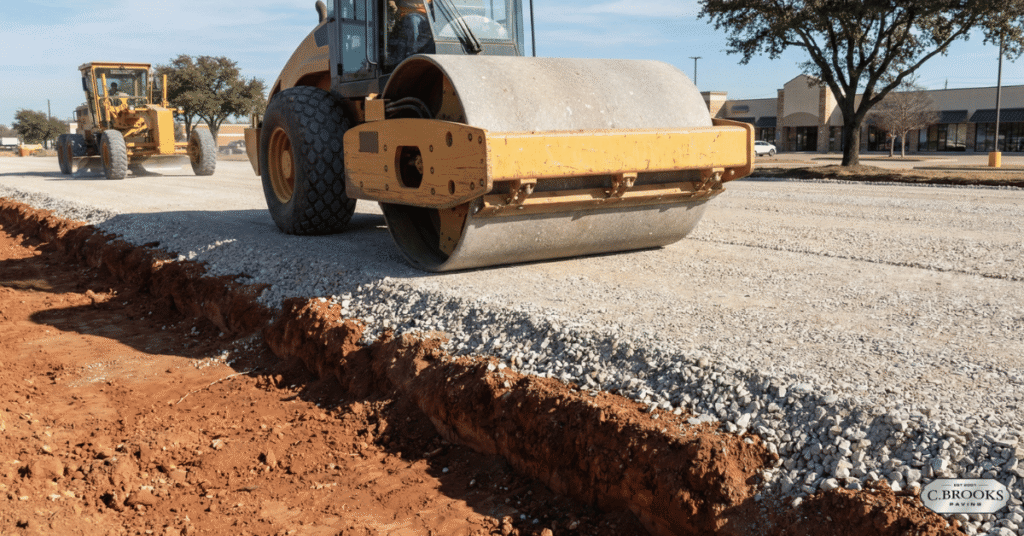
The sub-base serves as the foundation for your asphalt pavement installation. We install and compact aggregate materials, including crushed rocks or recycled asphalt, to create a stable platform that distributes weight evenly. This layer must achieve proper compaction to prevent future settling or pothole formation.
Texas heat and soil conditions demand careful attention during sub-base preparation. We use heavy rollers to achieve optimal compaction density of 95-98%, testing thoroughly before moving forward. The sub-base typically consists of 4-8 inches of gravel or crushed rocks that provides excellent drainage and structural integrity.
Step 4: Proof Rolling and Inspection
After sub-base installation, we perform proof rolling to identify any weak spots requiring repair. A heavy roller passes over the entire surface, revealing sections that need additional work. This important step prevents problems that would appear after laying asphalt.
If soft spots are detected, we perform undercutting by:
- Removing unstable materials from weak areas
- Replacing with properly compacted aggregate for strength and stability
- Re-testing until the entire surface is stable
- Ensuring uniform support across the paving project
Step 5: Binder and Surface Course Application
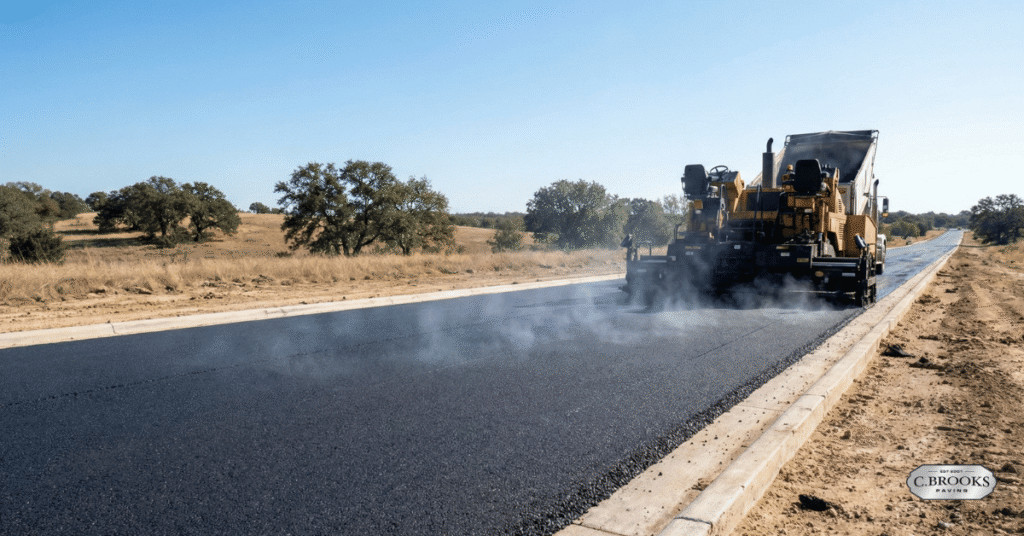
The binder layer consists of larger aggregate mixed with oil, creating a strong and durable pavement base. We apply this asphalt layer at specific temperatures between 280-300°F from the asphalt plant to ensure proper adhesion and compaction.
After the binder cures, we install the surface course of hot asphalt mix. This asphalt surface uses smaller aggregate for a smooth finish that resists wear and tear. C. Brooks Paving monitors the thickness of the asphalt carefully during application, as Texas heat affects how quickly the asphalt mixture cools and sets.
Surface application requires maintaining proper temperature, spreading material evenly across the surface, creating smooth transitions at edges, and working efficiently before material cools.
Step 6: Compaction and Finishing
Once fresh asphalt is laid, heavy rollers compact the material while it’s still hot. Multiple passes ensure density and smoothness across the entire asphalt surface. Edge work and detail finishing create clean lines and proper connections to the existing surface.
The compaction process follows a specific mix design pattern, starting from edges and working toward the center. This technique prevents displacement and achieves uniform density throughout the pavement. Proper compaction is essential for the longevity of the asphalt and structural integrity of your paving job.
Step 7: Cooling, Curing, and Striping
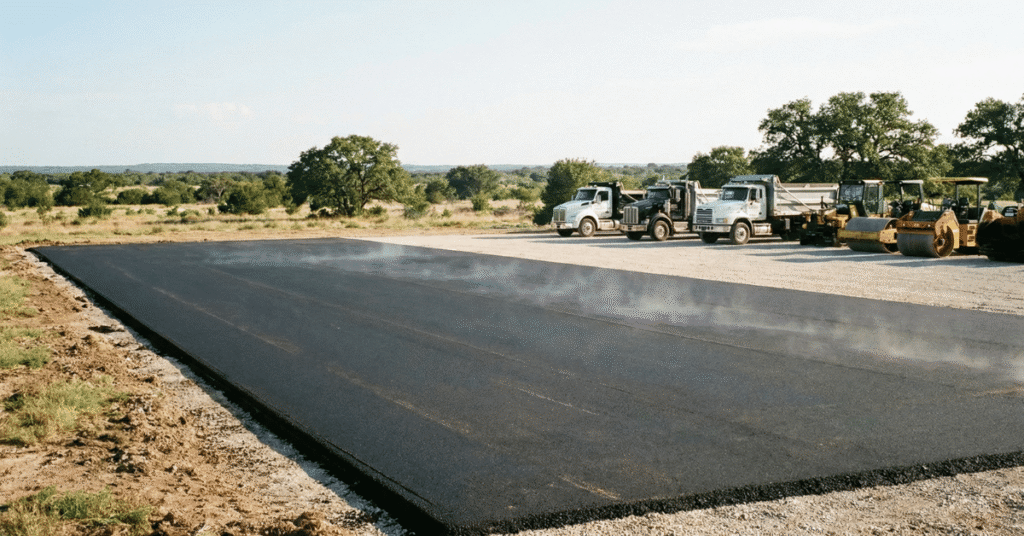
New pavement needs time to cure properly before accepting heavy traffic. This final step in the asphalt paving process ensures long-lasting results. We provide specific instructions about when you can safely use your new asphalt pavement.
Typical curing guidelines include:
- Wait 24-48 hours before driving on new asphalt
- Avoid heavy vehicles for the first 5-7 days
- Allow full curing over 6-12 months for maximum strength
- Schedule striping after initial curing period
Rushing this phase can damage your pavement surface and void warranties. Following professional guidance from asphalt pavement contractors protects your investment.
Special Considerations for Central Texas Properties
The basics of asphalt paving in Texas require understanding our unique climate challenges. Extreme summer heat can soften the asphalt or concrete surface, while occasional winter freezes create expansion and contraction cycles that impact asphalt durability.
Bulverde and Hill Country properties often deal with rocky terrain requiring extra excavation, caliche layers that affect drainage, seasonal weather variations, and high temperatures during summer months. C. Brooks Paving adjusts techniques based on these local conditions for successful paving results.
Post-Installation Maintenance and Repair
Proper maintenance extends asphalt lifespan significantly and ensures a successful asphalt paving project relies on ongoing care. Regular sealcoating services protect against UV damage and water infiltration. Prompt cleaning and repair prevent small issues from becoming major problems.
We recommend sealcoating every 2-3 years for driveways and parking lots in South Texas. This protective layer keeps water out and maintains the attractive appearance of quality asphalt. Quick attention to cracks and damage prevents pothole formation.
Contact Us for Professional Paving Services
Understanding the asphalt paving process helps you appreciate the complexity of professional installation. Each of these process steps builds on the previous one, creating a durable pavement that handles Texas weather and heavy use.
C. Brooks Paving offers comprehensive paving services including specialized paving for commercial and residential projects. From initial assessment through final striping and maintenance, we handle every aspect with expertise. Contact us today to discuss your paving project and discover why quality, trust, and precision define our work as your trusted asphalt paving contractor.