Skip to content





A chip seal driveway in Texas typically costs $2 to $5 per square foot, with most homeowners spending between $700 and $2,900 for a standard two-car driveway. That makes chip seal one of the most affordable paved driveway options available, running roughly 30% to 40% less than a traditional asphalt driveway and well below the cost of concrete. Your final number depends on driveway size, base condition, stone selection, and whether you choose a single or double seal.
If you’re a Texas homeowner weighing your driveway options, chip seal deserves a close look. This guide breaks down exactly what drives chip seal driveway cost in the Lone Star State, what hidden expenses to watch for, and how to stretch your paving budget further.
Key Takeaways
- Chip seal driveways cost $2 to $5 per square foot in Texas, with an average total of $700 to $2,900 for a two-car driveway.
- Single chip seal runs $2 to $3 per square foot, while double chip seal costs $3 to $5 per square foot for added durability.
- Chip seal is 30% to 40% more affordable than asphalt and significantly less expensive than concrete driveways.
- Texas heat actually benefits chip seal by helping minor cracks self-heal as temperatures rise.
- Hidden costs like site grading ($5 to $8 per square foot) and permits ($500 to $2,000) can add significantly to your total budget.
How Much Does a Chip Seal Driveway Cost in Texas?
Chip seal driveway cost in Texas generally falls between $2 and $5 per square foot for a new installation. If you’re resurfacing an existing asphalt or gravel driveway with chip seal, costs drop to the lower end of that range, often between $1 and $3 per square foot. According to pricing data from HomeGuide’s 2026 cost analysis, most homeowners pay between $700 and $2,900 total for a standard two-car driveway installation.
For context, a typical residential driveway in Texas ranges from about 400 to 800 square feet for a two-car setup. That puts your realistic budget somewhere between $800 and $4,000 depending on your specific project requirements and the scope of preparation work involved.
Cost Per Square Foot Breakdown
The per-square-foot cost of your chip seal driveway depends largely on whether you’re building new or resurfacing an existing surface. New installations on a prepared base typically land between $2 and $5 per square foot. Resurfacing projects, where the existing base is still structurally sound, can come in at $1 to $3 per square foot since less preparation is needed.
Labor accounts for roughly 50% of your total project cost, according to industry cost estimates from Sublime Pavers. That percentage can climb higher if your property requires extra site work or if you’re located in an area with limited access to chip seal contractors.
Single vs. Double Chip Seal Pricing
One of the biggest pricing decisions you’ll make is whether to go with a single or double chip seal. A single chip seal applies one layer of hot liquid asphalt followed by a single layer of crushed stone, and it typically costs $2 to $3 per square foot.
A double chip seal repeats the process with a second layer, creating a thicker, more durable surface that costs $3 to $5 per square foot. According to cost data from HomeGuide, choosing a double chip seal can extend your driveway’s lifespan from the standard 7 to 10 years up to 12 to 15 years. For driveways that handle daily traffic from multiple vehicles or heavier loads like work trucks, the double seal is often worth the added investment.
What Factors Affect Your Chip Seal Driveway Budget?
Several variables influence what you’ll actually pay for a chip seal driveway in Texas. Understanding these factors helps you plan a more accurate budget and avoid surprises when quotes come in.
Driveway Size and Layout
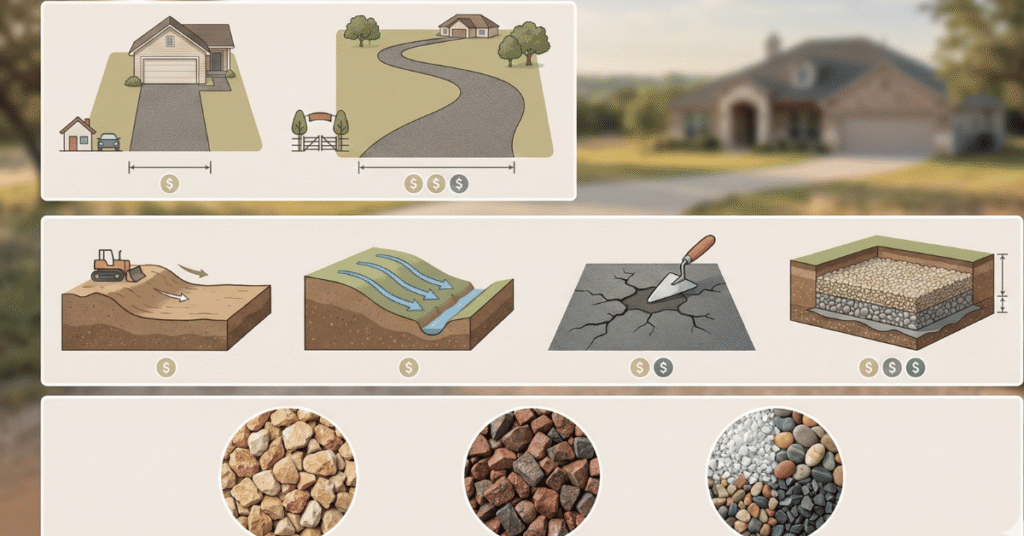
Driveway size is the most straightforward cost driver. A standard two-car driveway of around 500 square feet will cost far less than a long ranch-style driveway stretching 1,000 square feet or more. Complex layouts with curves, turnarounds, or irregular shapes also increase costs because they require more labor time and material precision.
According to pricing guidance from Angi, driveways typically range between 120 and 1,000 square feet. Contractors may offer better per-square-foot rates on larger projects, but the total cost still rises with size.
Site Preparation and Grading
The condition of your existing surface or ground has a major impact on your final bill. If your property needs grading to ensure proper water drainage away from your home, expect to add $5 to $8 per square foot for that work alone. Filling potholes, removing vegetation, and repairing cracks in an existing surface can add another $300 to $1,500 depending on the extent of the damage.
Proper drainage is essential in Texas, where heavy rainstorms can send water rushing across flat surfaces. Skipping grading to save money upfront often leads to premature surface failure when water seeps beneath the chip seal and weakens the bond between asphalt and stone.
Aggregate Type and Color
The type and color of stone you select for your chip seal also affects cost. Standard crushed limestone and granite aggregates are among the most affordable options, typically costing $0.45 to $2 per square foot for the stone alone. However, premium options like lava rock or quartz can push aggregate costs up to $11 per square foot according to material pricing from Angi’s cost guide. Many Texas homeowners opt for tan limestone or red granite chips, which complement Hill Country landscapes while keeping material costs reasonable.
How Does Chip Seal Compare to Asphalt and Concrete Driveways?
When budgeting for a new driveway, it helps to see how chip seal stacks up against the two most common alternatives. Here’s a side-by-side look at what Texas homeowners can expect.
Upfront Cost Comparison
| Driveway Type | Cost Per Sq Ft | Typical Total | Lifespan |
| Chip Seal | $2 – $5 | $700 – $2,900 | 7 – 10 years |
| Asphalt | $5 – $12 | $3,125 – $7,377 | 15 – 30 years |
| Concrete | $6 – $15 | $3,600 – $9,000 | 30 – 40 years |
| Gravel | $1 – $3 | $300 – $1,800 | 3 – 5 years |
As the table shows, chip seal sits in a cost-effective middle ground. It’s a significant upgrade over gravel in terms of durability and appearance, yet it costs a fraction of what you’d spend on asphalt or concrete. For Texas homeowners with longer driveways or rural properties, this price difference adds up quickly. If you’re weighing your options, our comparison of tar and chip vs traditional asphalt breaks down the differences in more detail.
Long-Term Maintenance Costs
One of chip seal’s biggest financial advantages is its low maintenance profile. Unlike asphalt, which needs professional sealcoating every 3 to 5 years at $400 to $800 per application, chip seal requires minimal ongoing upkeep. According to cost analysis from Sublime Pavers, total maintenance costs for a chip seal driveway typically stay under $500 over its entire 7 to 10 year lifespan.
That’s a substantial saving compared to asphalt, where sealcoating alone can run $1,600 to $3,200 over a 20-year period, not counting separate crack repair costs. Concrete driveways crack less frequently but cost more to fix when they do, with resurfacing running $3 to $10 per square foot.
Why Is Chip Seal a Smart Choice for Texas Properties?
Chip seal isn’t just affordable. It’s particularly well suited to the climate and property styles found across South Texas and the Hill Country. Here’s why this surface treatment makes practical sense for Texas homeowners.
Heat Resistance and Self-Healing Properties
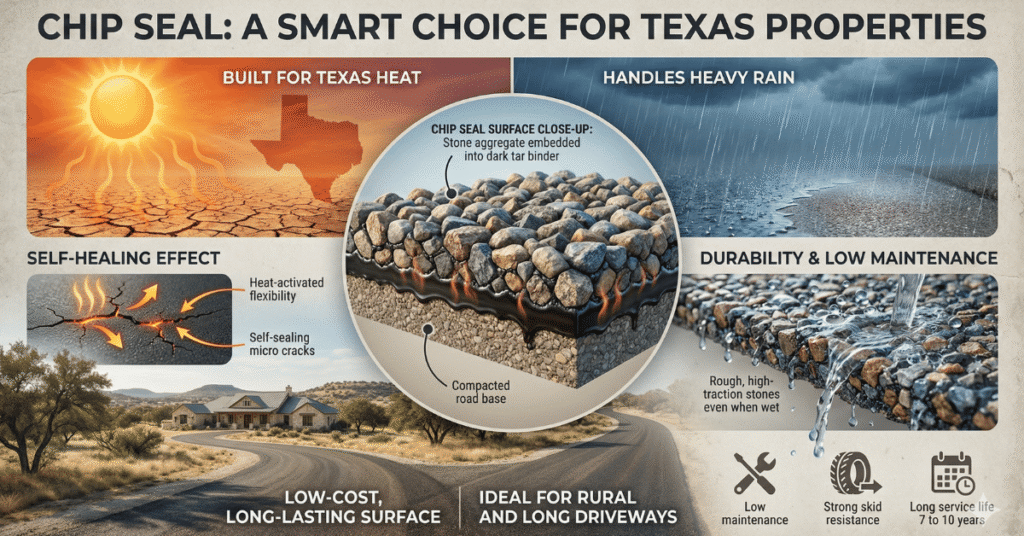
Texas summers push temperatures well above 100 degrees for weeks at a time, which can soften traditional asphalt surfaces and cause them to deform under vehicle weight. Chip seal handles this heat differently. As described in industry analysis from Joseph’s Chip Seal Paving, the tar binder in chip seal becomes slightly more pliable in high temperatures, allowing it to flow into minor cracks and effectively reseal them without any intervention. This self-healing characteristic is especially valuable in regions like the Hill Country, where intense sun exposure is a daily reality.
C. Brooks Paving has seen this firsthand on projects throughout Bulverde and the surrounding area. The combination of Texas heat and chip seal’s natural flexibility creates a surface that adapts to seasonal temperature swings rather than fighting against them. You can learn more about the benefits of chip seal driveways for rural properties on our blog.
Low Maintenance and Durability in South Texas
Chip seal surfaces also perform well under the heavy rainstorms common in South Texas. The textured stone finish provides strong traction even when wet, reducing the risk of slipping during sudden downpours. And because chip seal doesn’t require regular sealcoating like asphalt does, maintenance costs stay low year after year.
The Federal Highway Administration (FHWA) describes chip seal as “the single most important low-cost maintenance method used today,” noting that it produces an all-weather surface that renews weathered pavements and improves skid resistance. For Texas homeowners, that translates to a surface that holds up through both blistering summers and heavy spring rains with minimal upkeep.
With a properly installed chip seal driveway, you can expect 7 to 10 years of reliable service with only basic care, like occasional sweeping and keeping an eye out for edge damage. For long rural driveways and ranch properties across Texas, where maintaining miles of asphalt would be costly, chip seal delivers strong value. As noted in a Texas-focused driveway guide from ChipSeal.net, the surface performs well across every Texas climate zone, from the dry heat of West Texas to the humidity along the Gulf Coast.
What Hidden Costs Should Texas Homeowners Watch For?
The quoted cost per square foot for chip seal doesn’t always tell the full story. Several additional expenses can catch homeowners off guard if they’re not accounted for during the planning phase.
Permits and Site Surveys
If your driveway connects to a public road, your municipality may require a construction permit. According to permit cost data from HomeAdvisor, building permits for driveway work range from $500 to $2,000, with an average around $1,100. Permit requirements vary by city and county across Texas, so it’s important to check with your local building authority before work begins.
In some cases, contractors may also recommend a land survey if your property lines aren’t clearly established. This ensures the driveway stays within your property boundaries and helps the contractor account for topography changes that could affect grading and drainage.
Base Repairs and Drainage Work
If you’re laying chip seal over an existing surface that has significant damage, repair costs can add up. Minor crack repairs might run $300 to $800, while more extensive structural issues can push repair costs to $2,000 or more. If the existing surface has more than about 30% damage, some contractors recommend full removal and replacement rather than resurfacing.
Drainage improvements are another common add-on. Grading your property to direct water away from the driveway and your home’s foundation typically costs $5 to $8 per square foot. While it’s an upfront expense, proper drainage protects your chip seal investment and prevents premature failure. To understand more about avoiding issues with your installation, check out our guide on common chip seal driveway mistakes homeowners make.
How to Save Money on Your Chip Seal Driveway Project
Chip seal is already one of the most budget-friendly paving options, but there are smart ways to reduce your costs further without sacrificing quality.
Timing Your Installation
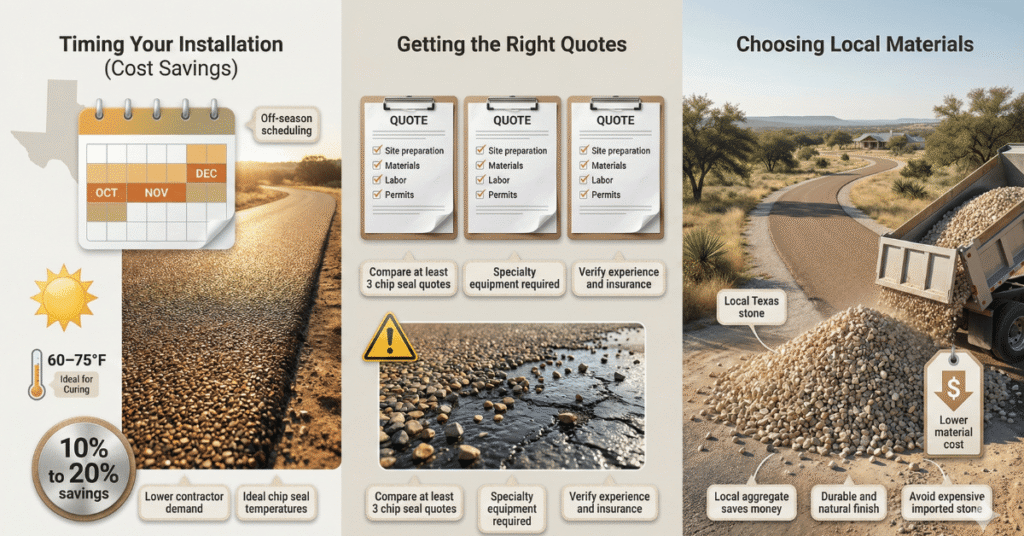
Scheduling your chip seal installation during a contractor’s slower season can lead to meaningful savings. In Texas, late fall and early winter tend to be less busy periods for paving contractors. Booking during these off-peak months can save you 10% to 20% on your total project cost, according to seasonal pricing insights from Sublime Pavers. Contractors are more likely to negotiate on price when their schedules are lighter.
That said, chip seal installation requires warm, dry weather for proper bonding and curing. In South Texas, temperatures are generally favorable for paving well into November and even December, giving you a window to take advantage of off-season pricing while still getting ideal installation conditions.
Getting the Right Quotes
Always get at least three quotes from contractors who have specific experience with chip seal. Not every asphalt company handles chip seal properly, and a poorly executed job leads to loose stones and premature wear. When comparing quotes, make sure each one includes the same scope of work: site preparation, material costs, labor, and any necessary permits.
As HomeAdvisor’s paving cost experts emphasize, “Tar and chip paving is a specialty service that requires different tools, higher asphalt temperatures, and on-site layering skills.” They recommend asking potential contractors how many chip seal projects they’ve completed, requesting references or photos of past work, and verifying insurance coverage before signing any agreement.
You can also save by choosing locally available aggregate materials. Standard crushed limestone is widely available across Texas and keeps material costs down while still delivering a durable, attractive finish. Exotic stone options look great but can significantly increase your material budget. For a full breakdown of driveway options, our guide on choosing the best driveway material for your home can help you compare options.
Ready to Budget for Your Chip Seal Driveway?
Chip seal offers Texas homeowners a cost-effective, durable, and low-maintenance driveway surface that’s well suited to our climate. At $2 to $5 per square foot, it delivers real value for properties of all sizes, from suburban driveways in Bulverde to long ranch roads across the Hill Country.
The key to getting the most from your chip seal budget is working with an experienced local contractor who understands South Texas conditions. Proper base preparation, the right aggregate selection, and correct application timing all make the difference between a surface that lasts a decade and one that breaks down in just a few years.
Contact C. Brooks Paving for a free consultation on your chip seal driveway project. Our team has been serving Bulverde and the greater Hill Country for four generations, and we’re here to help you make a smart, informed decision about your driveway investment.
If you’re also considering resurfacing an older surface, take a look at our guide on the chip seal driveway resurfacing process for step-by-step details.