Skip to content





Before hiring an asphalt paving contractor, ask whether they are licensed, bonded, and insured, how much experience they have with projects like yours, what materials and equipment they use, whether they provide a detailed written estimate, and what warranty they stand behind. These five questions separate skilled professionals from corner-cutters and protect your investment for years.
Questions You Should Ask an Asphalt Paving Contractor
Choosing the right contractor is one of the biggest factors in how long your pavement lasts. A new driveway or parking lot is a serious investment, and the quality of the work decides whether it holds up or starts cracking within a couple of seasons. The good news is that a few smart questions upfront will help you make a confident, informed choice.
If you want a broader overview first, our complete guide to asphalt paving in South Texas covers the basics. Here’s what to ask.
Key Takeaways
- Always confirm the contractor is licensed, bonded, and insured before any other question.
- Ask about local experience and request references from similar recent jobs.
- Get a detailed written estimate that lists scope, materials, and asphalt thickness.
- Discuss material quality, compaction, and drainage, since these decide how long the surface lasts.
- Confirm the warranty and ask for a maintenance plan, including sealcoating frequency.
What Are the Most Important Questions to Ask Before Hiring?
The most important questions to ask an asphalt paving contractor cover credentials, experience, materials, pricing, and warranty. A trustworthy contractor will answer all of them clearly and put the details in writing. If someone dodges these questions or offers only a verbal price, that’s a warning sign.
Here is the core checklist to bring to every estimate:
- Are you licensed, bonded, and insured?
- How long have you been doing this work, and do you handle projects like mine?
- What materials and equipment will you use?
- Can you provide a detailed written estimate?
- What warranty do you offer, and what maintenance do you recommend?
Each question is explained below so you know what a strong answer sounds like.

Are You Licensed, Bonded, and Insured?
This should be your first question, every time. Hiring a contractor without verifying their legal standing can leave you facing costly liabilities and substandard work. Proper credentials protect you if something goes wrong on your property.
A legitimate contractor should carry two key types of insurance. General liability covers damage to your property during the job, and workers’ compensation covers any injuries a crew member suffers while working on your site. Without that coverage, you could be held liable for an on-site accident.
Bonding adds another layer of protection. A bond protects the customer if the contractor fails to complete the job or abandons the project, giving you financial recourse. A professional will be glad to show this paperwork, not reluctant.
How to Verify Credentials Yourself
Don’t just take a verbal promise. You can confirm the details in a few minutes:
- Ask for the contractor’s license number and check it against your state’s online licensing database.
- Request current certificates of insurance and confirm the dates are active.
- Verify the business name, address, and phone number match across their documents and listings.
Texas does not have a single statewide license for paving work, so references and proof of insurance carry extra weight here. Never hire a contractor who hesitates to share documentation.
How Much Experience Do You Have With Projects Like Mine?
Experience directly affects the quality of your finished surface. Contractors who have worked in your area for several years understand the local climate, soil conditions, and drainage challenges that shape a paving job. A residential driveway is very different from a commercial parking lot, so ask whether they regularly handle work like yours.
Local knowledge matters more than you might think. A crew that knows how South Texas heat and soil behave will prep the base correctly and avoid mistakes that lead to early cracking. Proper base preparation is the single biggest factor in how long pavement survives.
References and Past Work
Any contractor worth hiring should have a portfolio and customers willing to vouch for them. Ask for photos of recent jobs similar to yours and request references you can actually call. When you reach out, ask whether deadlines were met, whether the crew communicated clearly, and how the surface held up afterward. You can also review their past work to see the range and quality firsthand.
What Materials and Equipment Will You Use?
Not all asphalt is created equal, and the grade of materials directly affects appearance and longevity. Ask what type of asphalt and additives the contractor plans to use and why they recommend them for your property. A good contractor will explain the pros and cons based on your traffic load, climate, and budget.
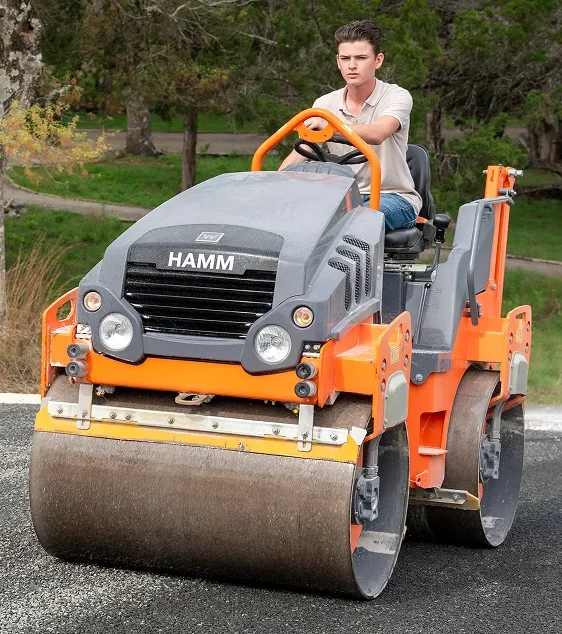
Equipment matters just as much as material. Well-maintained machinery, including a heavy-duty roller for proper compaction, produces a smooth, uniform surface and reduces the chance of mistakes. Poor compaction is one of the most common driveway paving mistakes and a frequent cause of premature failure.
Drainage is the question many owners forget to ask. Water is the enemy of asphalt. A skilled contractor will explain how the surface will be graded and sloped so water flows away rather than pooling. If they skip the drainage conversation entirely, treat that as a red flag.

Can You Provide a Detailed Written Estimate?
Always insist on a detailed written estimate. A price scribbled on a business card or a verbal agreement is a major warning sign. A professional contractor provides a written proposal that spells out every part of the job, so there are no surprises later.
A complete estimate should clearly list:
- The full scope of work, including excavation, grading, and base installation
- The specific materials to be used and the planned asphalt thickness
- A breakdown of labor and material costs
- A project timeline from site prep through cleanup
Asphalt thickness is worth flagging on its own. Too thin a layer saves the contractor money but shortens the life of your pavement. A written spec lets you compare bids fairly and hold the contractor to the agreed standard. This is also where you can ask about resurfacing versus replacing if you’re repairing an existing surface rather than starting fresh.
What Warranty and Maintenance Do You Offer?
Ask what warranty backs the work and what maintenance the contractor recommends to protect it. A reputable contractor stands behind the installation and helps you plan upkeep, because the longevity of your surface depends heavily on care after the job is done.
The numbers make the case for maintenance clear. An asphalt driveway typically lasts 15 to 30 years with proper care, but regular sealcoating and timely repairs can extend pavement life by 30 to 50%. Spending roughly $100 to $200 a year on maintenance can save $2,000 to $4,000 in premature replacement costs. Studies also show professionally maintained driveways retain about 80% of their integrity after 20 years, compared to 55% for surfaces left to DIY-only care.
That difference shows up in real projects. One homeowner we worked with had a 20-year-old driveway with severe cracking and was deciding between full replacement and repair. By patching the major cracks and following up with professional sealcoating, we extended the driveway’s life by five to seven years at about 60% cost savings versus replacement.
Ask your contractor how soon to sealcoat after installation and how often to reapply. Most surfaces benefit from sealcoating every two to three years. A contractor who explains this is one who cares about the result beyond the day the crew leaves.
Smart Questions Lead to a Stronger Driveway
Asking the right questions is the most reliable way to protect your paving investment. Confirm the contractor is licensed, bonded, and insured, check their local experience, dig into materials and drainage, demand a written estimate, and understand the warranty and maintenance plan. A few minutes of questions now can save you from cracking, uneven surfaces, and costly do-overs later.
At C. Brooks Paving, we welcome these questions because clear answers are how trust gets built. If you’re planning a driveway, ranch road, or parking lot in Bulverde or the greater Hill Country, contact C. Brooks Paving for a free consultation and a detailed written estimate. We’re here to help you make the best decision for your property.