Skip to content





Most property owners in Bulverde TX don’t realize that asphalt pavement isn’t just a single layer of blacktop material. Professional asphalt paving involves multiple layers working together, with asphalt binder and topcoat serving completely different roles in the overall structure.
The confusion between these two paving materials often leads to poor decisions during projects. Some paving contractors might recommend one when you actually need both, while others might suggest unnecessary work that inflates your costs without improving results.
Asphalt Binder vs Top Coat
C. Brooks Paving has worked on countless driveways, parking lots, and roads throughout the Hill Country over four generations. We’ve learned that educating property owners about material choices leads to better paving solutions and longer-lasting results.
What Is Asphalt Binder in Paving Projects
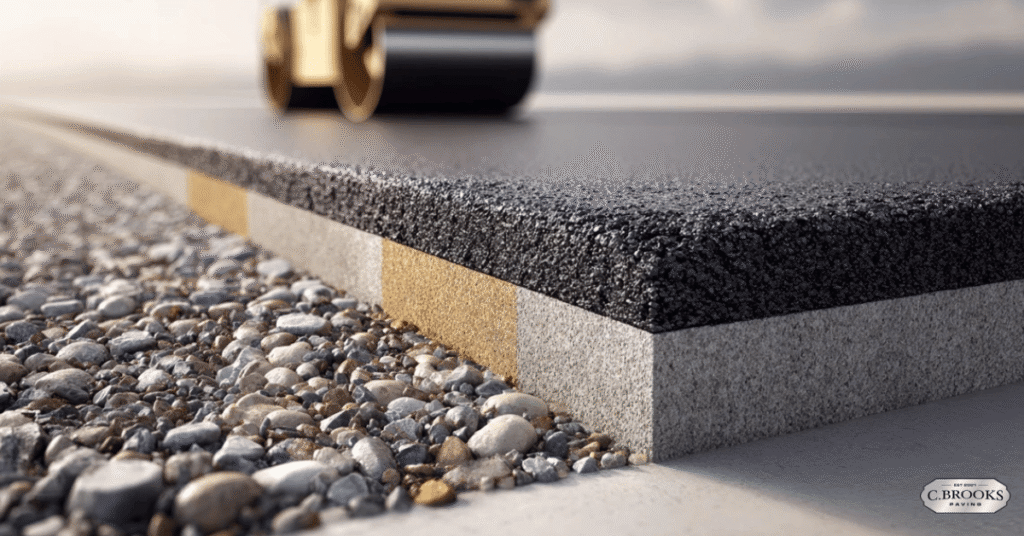
Asphalt binder, often called the binder course or base course, forms the foundation of any quality asphalt paving project. This layer sits directly above the compacted aggregate base and below the final surface layer. Think of it as the structural backbone that supports everything above it.
The binder course uses larger aggregate stones, typically 3/4 inch in diameter, mixed with bitumen. This composite material creates a strong, stable base layer that can handle heavy loads and resist deformation. For road construction and parking lot paving Bulverde businesses depend on, the binder layer typically ranges from 2 to 3 inches thick.
Key characteristics of asphalt binder include:
- Larger aggregate size for providing strength and structural support
- Greater thickness compared to surface layers
- Higher load-bearing capacity to withstand heavy traffic
- Coarser texture and appearance
- More cost-effective per ton than topcoat materials
- Essential for durability and longevity in commercial applications
What Makes Topcoat Different in Asphalt Pavement
The topcoat, also known as the wearing course or surface course, is what you actually see and drive on every day. This final layer of asphalt protects the binder course from weather, traffic, and daily wear. It’s specifically designed to handle direct exposure to the elements while providing a smooth driving surface.
Topcoat asphalt uses smaller aggregate, usually 1/2 inch or less, creating a tighter, smoother finish. This finer aggregate mix seals better against water infiltration and provides better skid resistance for vehicles. C. Brooks Paving typically applies topcoat at 1.5 to 2 inches thick for most driveway paving and commercial paving applications.
The topcoat serves multiple purposes beyond aesthetics:
- Prevents water from reaching the binder layer
- Resists UV damage from intense South Texas sun
- Provides the skid resistance needed for safe conditions
- Creates a long-lasting surface for daily use
- Delivers a smooth ride for vehicles
Comparing Binder and Topcoat: Key Differences Between Asphalt Layers
Understanding the distinctions between these paving materials helps property owners and managers make informed decisions. The base coat provides strength and stability, while the topcoat delivers protection and performance. Each serves a specific purpose that the other can’t adequately fulfill.
Professional asphalt paving requires both layers working in harmony. The binder provides structural support while the topcoat delivers protection. Skipping either layer or using incorrect specifications almost always leads to premature failure and costly repairs.
The layered approach offers several advantages:
- Better load distribution across the pavement structure
- Improved water resistance and drainage
- Longer overall pavement longevity
- Reduced need for asphalt repairs
- Greater flexibility to handle freeze-thaw cycles
- Enhanced strength and durability for commercial paving projects
When Your Paving Needs Require Asphalt Binder
New asphalt construction projects always require a proper binder layer. Whether you’re installing a new driveway, building parking lots, or working on road construction, the binder course is non-negotiable for quality results and long-lasting performance.
Existing paved surfaces sometimes need binder layer replacement when structural integrity has failed. If your asphalt shows widespread cracking, significant settling, or recurring rut formation despite repeated repairs, the binder layer may have deteriorated beyond simple surface fixes.
When to Focus on Topcoat Applications for Asphalt Surfaces
Resurfacing projects often involve removing and replacing just the topcoat layer. If your pavement’s binder remains structurally sound but the surface shows wear, a new layer of asphalt topcoat can restore appearance and function at a fraction of new construction costs.
Topcoat replacement makes sense when you notice:
- Surface cracking that hasn’t penetrated to the base course
- Fading or weathering of the blacktop surface
- Minor texture degradation or aggregate loss
- Reduced skid resistance in wet conditions
- Need for parking lot striping updates
Seal coating services and asphalt crack repair work best on asphalt surfaces with intact topcoat layers. These maintenance activities protect your investment but can’t compensate for structural problems in the binder course. Regular sealcoating extends the life of your pavement, particularly in high-traffic areas like office parks and commercial parking lots.
Common Mistakes That Compromise Pavement Quality
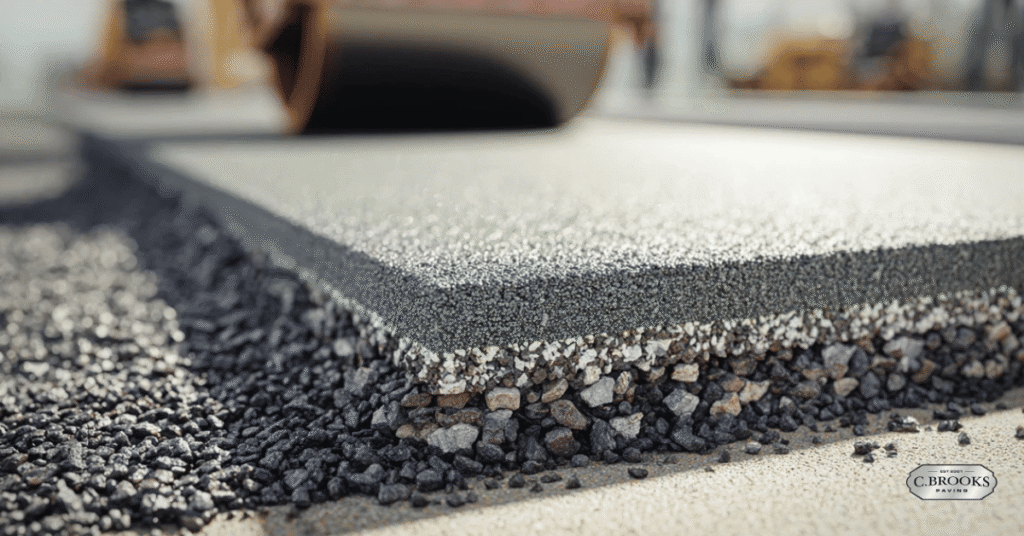
Some asphalt contractors cut corners by applying only a single thick layer instead of proper binder and topcoat construction. This approach might look acceptable initially, but it fails to provide the structural integrity and protection that two-layer systems deliver.
Using topcoat material for the entire pavement depth wastes money without improving performance. The finer aggregate and tighter mix of topcoat costs more but doesn’t provide the structural benefits of proper base course material. These layers don’t serve the same purpose and shouldn’t be used interchangeably.
Incorrect thickness specifications cause problems too:
- Too thin, and the pavement can’t handle expected loads
- Too thick, and you’re spending upfront costs unnecessarily
- Wrong material that holds up poorly under stress
- Inadequate compact techniques leading to early failure
Professional Installation Makes the Difference in Asphalt Construction
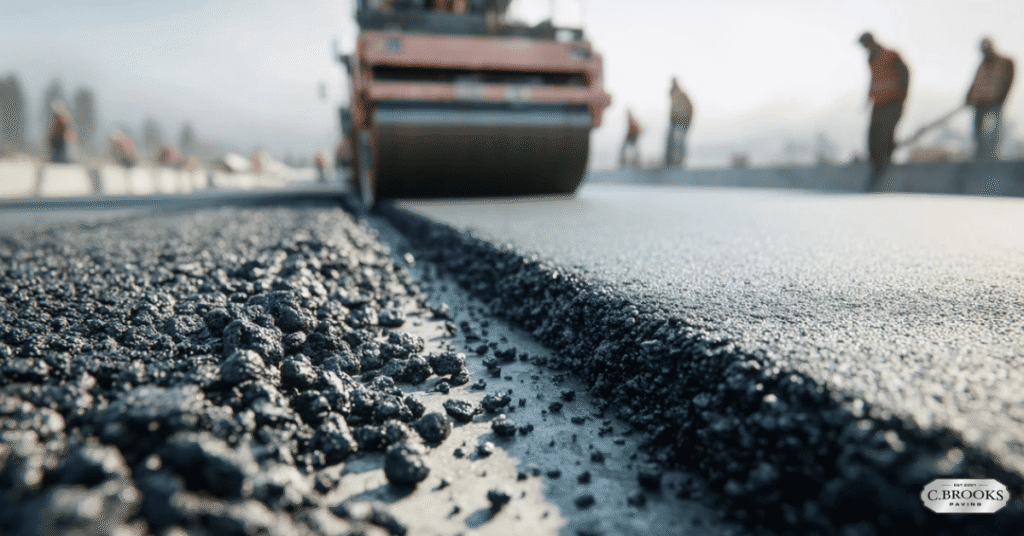
Quality asphalt paving requires more than just good paving materials. Proper temperature control during placement, correct compaction techniques, and attention to drainage all affect final results in the asphalt industry.
C. Brooks Paving brings four generations of expertise to every project, ensuring both binder and topcoat layers meet exacting standards. Our crew handles everything from initial site preparation through final surface finishing, including installation, repair, and cleaning services. We understand how material choices affect performance and can recommend the right specifications for your specific needs.
Making Smart Choices for Your Asphalt Services Investment
Understanding binders and topcoats helps property owners make informed decisions about paving projects. Both materials serve essential purposes, and cutting corners on either compromises the entire pavement system and leads to heavily damaged areas requiring extensive repairs and maintenance.
Work with experienced asphalt paving company professionals who understand proper material selection and application techniques. Quality installation using appropriate specifications costs less in the long run than cheap work that requires frequent repair or premature resurface work. The right approach provides cost-effectiveness over the pavement’s lifespan.
C. Brooks Paving has built our reputation on trust, precision, and quality workmanship across the Hill Country and South Texas. When you’re ready to discuss your commercial paving or residential paving needs, we’ll help you understand exactly what paving solutions your specific application requires and why those choices matter for lasting performance.