Skip to content





A commercial asphalt installation follows a structured sequence: site evaluation, demolition of old surfaces, grading and drainage setup, sub-base compaction, asphalt paving in multiple layers, and final compaction with curing.
Most standard commercial lots take a few days to a few weeks depending on size and weather, and the finished surface can last 15 to 20 years or longer with proper maintenance. Here is what every property owner should know before breaking ground.
Key Takeaways
- Commercial asphalt installation follows a proven sequence: site evaluation, demolition, base preparation, paving, compaction, and curing.
- The sub-base is the most critical layer in the entire process. Poor base preparation is the leading cause of premature pavement failure.
- Standard commercial lots cost between $3 and $8 per square foot in 2025, with larger projects benefiting from economies of scale.
- Curing takes 24 to 48 hours for light traffic, 3 to 7 days for regular business traffic, and up to 30 to 90 days for full hardening.
- Asphalt is America’s most recycled material, with 93% of reclaimed pavement reused in new construction according to the National Asphalt Pavement Association (NAPA).
What Does a Commercial Asphalt Installation Involve?
A commercial asphalt installation is a multi-phase construction process designed to create a durable, long-lasting paved surface for parking lots, access roads, loading areas, and other business properties. Unlike residential driveways, commercial projects require heavier-duty materials, thicker layers, and careful coordination with your daily operations. The process generally follows seven core steps: demolition, grading, sub-base installation, proof rolling, binder layer application, surface course paving, and final compaction with inspection.
Initial Site Evaluation and Permits
Every reliable commercial asphalt installation begins with a thorough site evaluation. Your paving contractor will assess the existing surface, check soil conditions, evaluate drainage patterns, and measure the total square footage. This evaluation also identifies any ADA compliance requirements for parking lot layouts that must be factored into the design. Local permits and utility mark-outs are handled before any equipment arrives on site.
What to Expect on the Timeline
The timeline for a commercial paving project varies based on lot size, weather conditions, and site complexity. A standard commercial parking lot typically takes 1 to 3 days for the actual paving phase, according to industry data from The Pavement Group. Larger projects with extensive demolition, grading, or drainage work can stretch to two or three weeks. In South Texas, where summer temperatures regularly exceed 100 degrees, your contractor may schedule early morning start times to take advantage of optimal paving conditions.
How Is the Site Prepared Before Paving Begins?
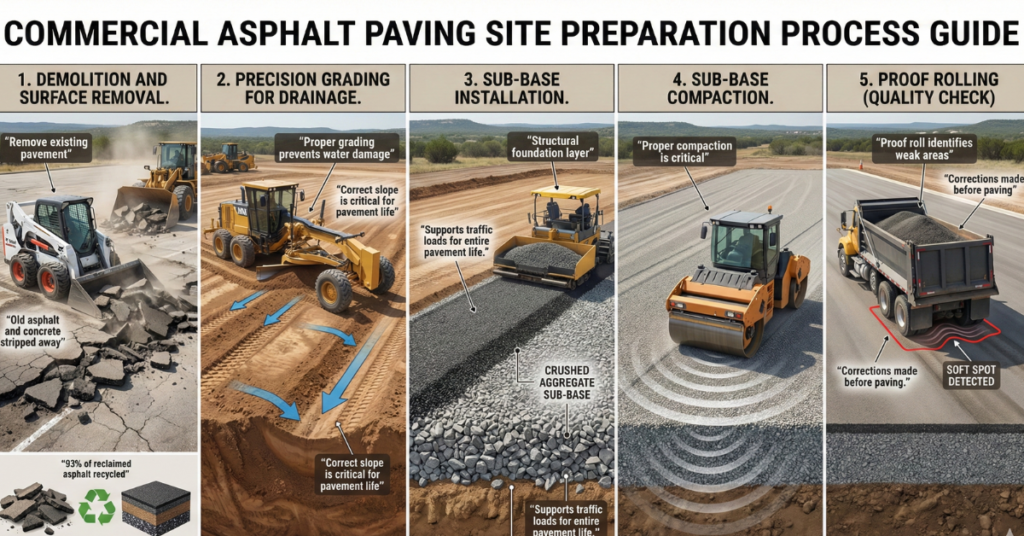
Site preparation is arguably the most important phase of any commercial asphalt installation. Without proper groundwork, even the highest-quality asphalt mix will crack, settle, or fail prematurely. This phase includes demolition of the old surface, precision grading for drainage, and careful sub-base compaction.
Demolition and Surface Removal
The first physical step is removing the existing pavement. Crews use bobcats, front loaders, and dump trucks to strip away old asphalt or concrete. At reputable paving companies, this old material does not go to waste. According to the National Asphalt Pavement Association (NAPA), 93% of reclaimed asphalt pavement (RAP) is recycled back into new road and parking lot construction. The use of RAP saved the industry more than $4.7 billion during the 2022 construction season alone, reducing material costs for property owners and road agencies alike.
Grading, Drainage, and Sub-Base Compaction
Once the old surface is cleared, the crew grades the underlying soil to establish proper water flow. Drainage is one of the leading causes of premature pavement failure, so getting the slope right is essential. In the Bulverde and Hill Country region, where clay-heavy soils can retain moisture, proper grading becomes even more critical. Understanding the full asphalt paving process for Texas properties helps you know what questions to ask your contractor.
After grading, the sub-base layer is installed. This layer, typically made of crushed aggregate or engineered fill, is the structural foundation for everything above it. According to Wolf Paving’s installation guide, the sub-base is the single most critical component of a new asphalt surface. It provides stability, acts as a frost barrier, and supports the weight of vehicles for the entire life of the pavement. If the sub-base is not properly compacted, no amount of quality asphalt on top will deliver long-term durability.
Proof Rolling
Before any asphalt is laid, professional contractors perform a proof roll. A heavy vehicle is driven across the compacted sub-base to identify any soft spots or areas of inadequate compaction. If weak points are discovered, the crew corrects them before moving forward. This step is a quality assurance measure that prevents costly problems down the road.
What Happens During the Asphalt Paving Phase?
The paving phase is where the project takes visible shape. Asphalt is delivered to the site at high temperatures, typically between 280 and 325 degrees Fahrenheit, and applied in multiple layers using a paving machine. Each layer serves a specific structural purpose.
Binder Layer and Surface Course
The binder layer is applied first. This is a coarser asphalt mix that provides structural strength and load-bearing capacity. On top of the binder goes the surface course, which uses a finer mix designed for smoothness, weather resistance, and long-term durability. The choice of asphalt mix can vary depending on expected traffic loads. As Asphalt Magazine notes, lift thickness should be a minimum of four times the nominal maximum aggregate size of the mix to achieve proper density. Commercial lots that handle heavy delivery trucks require thicker layers than those serving only passenger vehicles.
Compaction and Quality Inspection
After each layer is placed, roller trucks compact the asphalt to achieve the target density, typically between 92% and 96% of maximum theoretical density. According to research supported by the Federal Highway Administration (FHWA) and the National Center for Asphalt Technology (NCAT), each extra 1% of density achieved during compaction can extend pavement service life by approximately 10%. Proper compaction eliminates air voids, prevents water infiltration, and locks aggregate particles together for a smooth, resilient surface.
“Obtaining proper roadway compaction is probably the most important operation in the paving process to achieve long-lasting pavements.” – Asphalt Magazine / Asphalt Institute
Joint sealing and transition areas also receive careful attention. Where new asphalt meets existing concrete or pavement, contractors create smooth butt joints to ensure even surfaces for vehicles and pedestrians.
How Long Does a Commercial Asphalt Project Take to Cure?
Once the paving and compaction are complete, the curing process begins. Curing is the time asphalt needs to cool, harden, and reach its full load-bearing strength. You can generally expect the following timeline for a standard commercial installation:
| Milestone | Typical Timeframe | Notes |
| Light foot/vehicle traffic | 24 to 48 hours | Avoid sharp turns and heavy loads |
| Normal business traffic | 3 to 7 days | Most passenger vehicles can resume |
| Heavy truck traffic | 10 to 14 days | Delivery trucks and heavy equipment |
| Full curing/hardening | 30 to 90 days | Surface reaches maximum hardness |
Curing data sourced from SS Paving. In South Texas, high summer heat can actually accelerate initial curing, but it also means fresh asphalt is softer during peak afternoon temperatures. Your contractor should advise on the best reopening schedule based on local conditions.
How Much Does Commercial Asphalt Installation Cost?
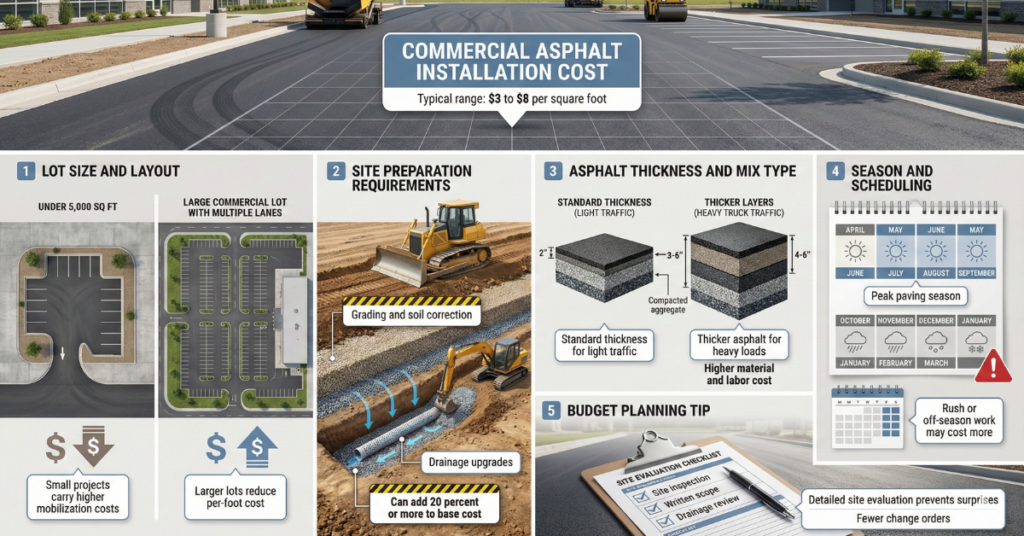
Budgeting for a commercial asphalt installation depends on several factors unique to your property. According to The Pavement Group’s 2025 cost breakdown, commercial paving typically costs between $3 and $8 per square foot. That range accounts for differences in lot size, site conditions, material thickness, and regional labor rates.
Key pricing factors include:
- Lot size and layout: Larger projects benefit from economies of scale. Small jobs under 5,000 square feet often carry higher per-foot rates due to mobilization and equipment costs.
- Site preparation needs: Extensive grading, soft soil remediation, or drainage upgrades can add 20% or more to the base cost.
- Asphalt thickness and mix type: Lots designed for heavy truck traffic require thicker base and surface layers, which increases both material and labor costs.
- Season and scheduling: Spring and summer are ideal paving seasons. Rush jobs or off-season work may carry premium pricing.
If you are planning parking lot paving for a small business, requesting a detailed site evaluation upfront helps you avoid surprise change orders and keeps the project on budget.
Tips for Minimizing Business Disruption During Paving
One of the biggest concerns for commercial property owners is how a paving project will affect daily operations. The good news is that experienced contractors can structure the work to keep disruption to a minimum. Here are practical strategies that help:
- Request phased scheduling. Rather than shutting down the entire lot at once, your contractor can pave in sections. This allows customers and employees to use one area while another is being resurfaced.
- Communicate early with tenants and customers. Give at least two weeks’ notice about construction dates, parking changes, and alternative access routes. Clear signage during the project keeps everyone safe and informed.
- Schedule around peak business hours. Many commercial paving crews can work early mornings, evenings, or weekends to avoid impacting your busiest times.
- Plan for temporary access. Work with your contractor to maintain at least one entrance and exit at all times. Emergency vehicle access should never be blocked.
One property owner we worked with needed a full 50,000-square-foot shopping center parking lot repaved. By phasing the project strategically, the team eliminated longstanding drainage issues, extended the lot’s projected lifespan by over 15 years, and reduced the owner’s annual maintenance costs by approximately 40%. That kind of result comes from thorough planning and experienced execution.
What Should You Look for in a Commercial Paving Contractor?
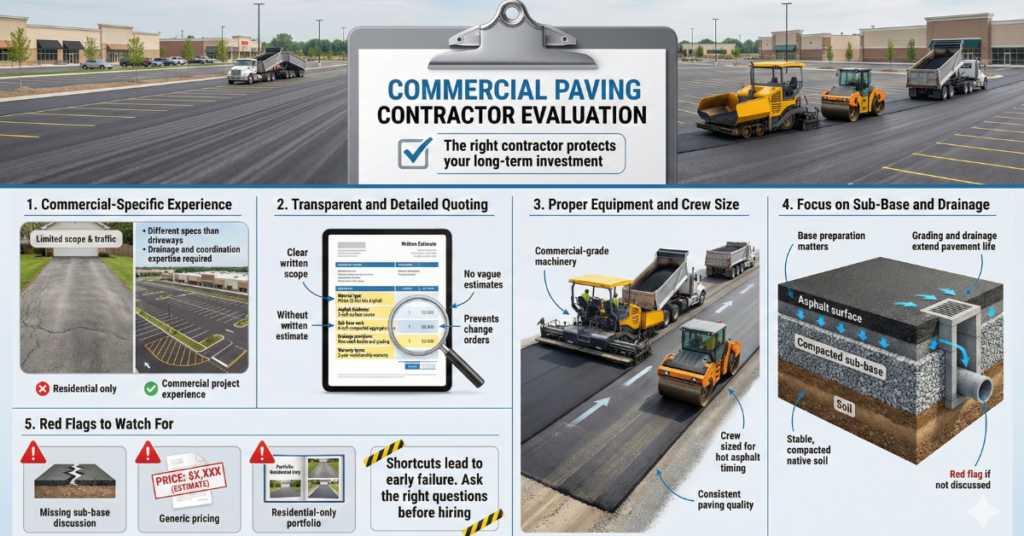
Choosing the right contractor can make the difference between a parking lot that performs for decades and one that needs costly repairs within a few years. The quality of your pavement depends as much on the crew’s expertise as on the materials they use. Here are key factors to evaluate:
- Commercial-specific experience: Commercial projects involve different material specs, drainage engineering, and coordination challenges than residential work. Make sure your contractor has a track record with commercial lots, not just driveways.
- Transparent quoting: A professional estimate should detail material types, thickness specs, sub-base work, drainage provisions, and warranty terms. Vague quotes often lead to costly change orders.
- Proper equipment and crew size: Commercial paving requires specific heavy machinery and enough crew members to keep pace with hot asphalt delivery schedules.
- Willingness to discuss the sub-base: If a contractor does not bring up base preparation, grading, or drainage during the quoting process, that is a red flag. These elements determine how long your pavement will last.
Ready to Start Your Commercial Asphalt Installation?
A commercial asphalt installation is a significant investment that pays off with years of reliable performance when the work is done right. The key steps to remember: start with a thorough site evaluation, invest in proper sub-base preparation, choose the right asphalt mix for your traffic loads, and allow adequate curing time before reopening to heavy use.
If you are wondering how long the asphalt paving process takes or want to learn more about your options, our team is here to walk you through every step.
Contact C. Brooks Paving for a free consultation and let us help you make the best decision for your property. We serve the Bulverde area and the greater South Texas Hill Country region with professional, durable commercial paving solutions built to last.