Skip to content





Choosing the right paving material for your driveway, parking lots, or road construction project isn’t just about picking what looks good. It’s a decision that impacts your budget today and for years to come. In Bulverde TX and across the Hill Country, property owners constantly wrestle with this question: should I pave with concrete or asphalt?
Concrete vs Asphalt Roads
The answer isn’t always obvious. Both materials have their strengths, and what works perfectly for one project might be completely wrong for another. Climate, traffic load, budget constraints, and long-term maintenance all factor into this decision. With South Texas heat beating down on surfaces for months at a time, choosing the wrong paving material can lead to premature failure, costly repairs, and frustration.
Asphalt Road Construction and Benefits
Asphalt has been the go-to choice for roadway construction across America for good reason. It’s made from a mixture of aggregate (crushed stone and sand), binder (petroleum-based bitumen), and filler materials. The asphalt mix creates a flexible, durable pavement that can handle the demands of daily traffic while adapting to ground movement and temperature fluctuations.
The installation process is straightforward and fast. Once the base is prepared, hot asphalt is laid, compacted, and ready for light use within 24-48 hours. This quick turnaround makes asphalt ideal for both residential and commercial paving projects where time matters.
Key benefits of asphalt pavement include:
- Lower initial cost compared to concrete (asphalt is less expensive by 30-50%)
- Faster curing time with minimal disruption to traffic
- Smoother, quieter driving surface (asphalt is quieter than concrete)
- Easier repair, cleaning, and installation processes
- Better flexibility in freeze-thaw cycles
- Fully recyclable, making it a greener material
- Superior traction and skid resistance for safety
However, asphalt requires regular maintenance like cleaning, repair, and sealcoating. With proper care including patch work and crack sealing, asphalt roads typically last 15-20 years before needing resurfacing.

Concrete Road Construction and Durability
Concrete roads are built from a mixture of Portland cement, water, and aggregate. This creates a rigid, strong road surface that can support heavy truck traffic for decades. The installation involves pouring concrete slabs with control joints to manage expansion and contraction.
One major disadvantage is the extended curing time. Concrete needs at least 7 days before it can handle regular traffic, and it takes 28 days to reach full strength. This longer timeline can be problematic for paving projects with tight deadlines.
Concrete offers these advantages:
- Longer lifespan of 30-40 years (concrete roads last longer with a service life of 20 to 40 years or more)
- Superior performance in extreme weather conditions and heat
- Higher load-bearing capacity for heavy loads
- Lower long-term maintenance needs (less frequent resurfacing required)
- Better visibility at night due to lighter color
- The benefits of concrete include excellent longevity and durability
The tradeoffs include higher initial construction costs, more complex repair processes, increased noise from tire friction creating a bumpy and noisy roadway, and susceptibility to cracking. When concrete does crack or break, replacing entire concrete slabs becomes expensive and time-consuming.
Concrete vs Asphalt: Side-by-Side Comparison
To help you understand the real differences and discover the pros and cons between these materials, here’s a detailed cost analysis based on factors that matter most:
Installation and Timeline:
- Asphalt: $3-$5 per square foot, ready in 24-48 hours
- Concrete: $5-$10 per square foot, requires 7-28 days full cure
- New asphalt provides immediate value with lower upfront cost
Lifespan and Durability:
- Asphalt: 15-20 years (shorter lifespan but easier maintenance)
- Concrete: 30-40 years (20-40 years under ideal conditions)
- Concrete pavements require less frequent maintenance
Maintenance Requirements:
- Asphalt: Cleaning, repair, and sealcoating every 2-3 years
- Concrete: Joint sealing every 5-10 years
- Asphalt patch and repair costs: $50-$150 per pothole
- Concrete slab replacement: $500-$1,500 per slab
Performance Characteristics:
- Asphalt surfaces provide better traction, smooth ride, and fuel efficiency
- Concrete surface offers superior load capacity
- Asphalt may soften in extreme heat (though modern asphalt mix handles it well)
- Concrete can offset higher initial costs with reduced frequent maintenance
- Asphalt production and asphalt parking lot installation are faster
Climate Considerations for Hill Country
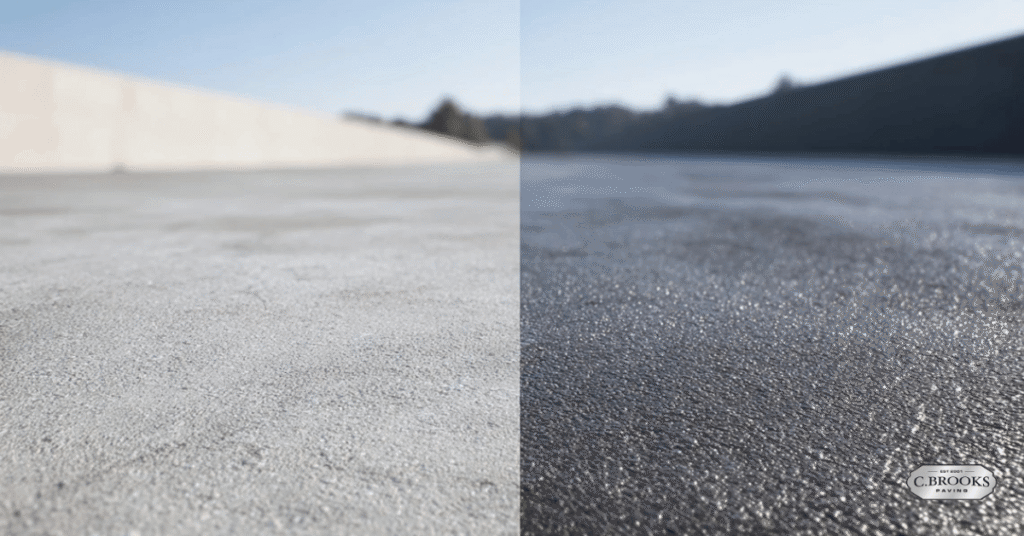
South Texas weather plays a huge role in the choice between asphalt and concrete. Our region experiences scorching summers with temperatures regularly exceeding 100 degrees. While some worry about melting asphalt, modern mixes are designed to withstand these conditions.
Concrete’s rigid structure can actually work against it in our climate. Temperature swings between hot days and cooler nights cause expansion and contraction, leading to joint deterioration and surface cracking. C. Brooks Paving has seen countless concrete driveways develop these problems across the region.
Why asphalt roads offer advantages in our climate:
- Flexibility prevents cracking from temperature fluctuation
- Asphalt and concrete both handle heat, but asphalt is ideal for repair
- Quick patch and repair services minimize downtime
- Better performance during freeze-thaw conditions
- Surface of asphalt adapts to ground movement
The comparison of asphalt vs concrete for our climate clearly favors asphalt’s flexibility over concrete’s rigidity.
Cost Analysis: Long-Term Value
Budget is often the deciding factor for property owners. The cost of asphalt wins on initial installation, typically running 30-50% less than concrete for the same project. For a standard driveway or parking lot, this difference means thousands in savings.
Whereas concrete requires less frequent maintenance, when repairs are needed, they’re expensive. Asphalt needs regular sealcoating and occasional crack repair, but these cleaning, repair, and installation services prevent bigger problems. The average cost over 20-30 years often favors asphalt, especially when you factor in wear and tear and replacement timelines.
Time concrete takes to cure also adds hidden costs in lost productivity. Like concrete, asphalt and concrete roads both need maintenance, but asphalt offers more affordable ongoing care. Concrete may require less frequent resurfacing, but concrete often needs expensive slab replacement compared to asphalt’s simple patch repairs.
Best Applications: Making the Right Choice
The best material depends on your specific needs. Asphalt is ideal for residential driveways, commercial parking lots, and projects with budget constraints. Asphalt offers superior value for most property owners in Bulverde TX.
Asphalt excels for:
- Residential driveways and private roads
- Commercial parking and asphalt parking lots
- Projects requiring quick installation and cleaning
- Areas needing better traction and smooth drive experience
- Situations where lower upfront cost matters
Concrete makes sense for:
- Interstate highways with extreme traffic loads
- Industrial facilities requiring maximum durability
- Projects where longevity outweighs higher initial costs
- Government roadway projects with minimal maintenance budgets
For most applications, the pavement option of asphalt provides the best combination of cost, performance, and practicality.
Why Choose C. Brooks Paving
With four generations of experience serving South Texas, C. Brooks Paving understands what works in our unique climate. We specialize in asphalt paving projects of all sizes, from residential driveways to commercial parking lots and road construction.
Our comprehensive services include asphalt installation, chip seal paving, crack repair, pothole repair, sealcoating, and regular cleaning. We use proven techniques and quality materials to ensure your investment delivers a smooth ride for years to come.
Whether you’re paving a road, expanding your parking area, or maintaining existing pavement, our experienced crew treats every project with care. We understand that asphalt and concrete roads serve different purposes, and we’ll help you make the informed decision.