Skip to content





Line striping improves traffic flow and safety by providing clear visual guidance that directs vehicles, protects pedestrians, and reduces the risk of collisions in parking lots and on roadways. Professional line striping organizes movement, maximizes usable space, and helps property owners in Bulverde, TX and across South Texas stay compliant with federal accessibility standards while lowering their liability exposure.
Key Takeaways
- Line striping reduces parking lot accidents – roughly 50,000 crashes occur in U.S. parking lots and garages every year, and clear markings are one of the most effective ways to bring that number down.
- Pavement markings cut nighttime crashes by up to 21% – according to a meta-analysis published by the Federal Highway Administration (FHWA), properly applied markings deliver measurable crash reductions.
- Lane departures cause nearly 60% of all U.S. highway fatalities – the American Association of State Highway and Transportation Officials (AASHTO) reports that over 25,000 people die annually from vehicles leaving their lanes.
- ADA non-compliance fines start at $75,000 – failing to maintain proper accessible parking striping can result in steep penalties and lawsuits under federal law.
- Re-striping every 12 to 24 months protects your investment, keeps markings visible, and reduces long-term maintenance costs.
Why Does Line Striping Matter for Traffic Flow?
Line striping is the foundation of organized vehicle movement in any parking lot or private roadway. Without clear markings, drivers are left guessing where to park, which direction to travel, and where pedestrians might be walking. That confusion leads to congestion, wasted space, and a frustrating experience for everyone on your property.
How Directional Markings Guide Vehicle Movement
Directional arrows, lane dividers, and stop bars work together to create a logical traffic pattern. When drivers can see exactly where to go, they spend less time circling and more time parking efficiently. One-way lane markings prevent head-on conflicts in tight spaces, while clearly painted entry and exit points reduce bottleneck situations during peak hours.
According to industry case studies from Asphalt Coatings Company, a grocery store that invested in fresh line striping saw a 22% increase in vehicle turnover during weekend hours and a 9% rise in total foot traffic. In a separate example, a 200-space shopping plaza reported that freshly striped drive lanes cut internal vehicle movement time by 25% during peak periods.
A well-designed line striping layout also helps you maximize the number of usable parking spaces. Angled parking markings encourage proper alignment, which means fewer vehicles taking up two spaces or blocking access to neighboring spots.
Reducing Congestion in High-Traffic Lots
High-traffic commercial lots, especially those near retail centers and medical facilities, depend on clear markings to keep vehicles moving. Designated loading zones, fire lanes, and delivery areas prevent blockages that can ripple through the entire lot.
One shopping center owner we worked with faced ongoing congestion and customer complaints across their 50,000 sq ft parking lot. After a complete resurfacing project that included professional line striping and improved drainage, they eliminated all drainage issues and reduced annual maintenance costs by 40% while extending the surface life by over 15 years. When you invest in planning parking lot paving for small businesses, line striping should always be part of the plan.
What Are the Safety Benefits of Professional Line Striping?
Professional line striping directly reduces the risk of accidents by providing clear, consistent visual cues for both drivers and pedestrians. In parking lots and on private roads, safety depends on everyone understanding where they should be and how to move through the space.
Pedestrian Protection Through Clear Walkways
Clearly marked crosswalks and pedestrian pathways create a distinct separation between foot traffic and vehicle traffic. This separation is critical in busy lots where shoppers, employees, and children are moving between parked cars.
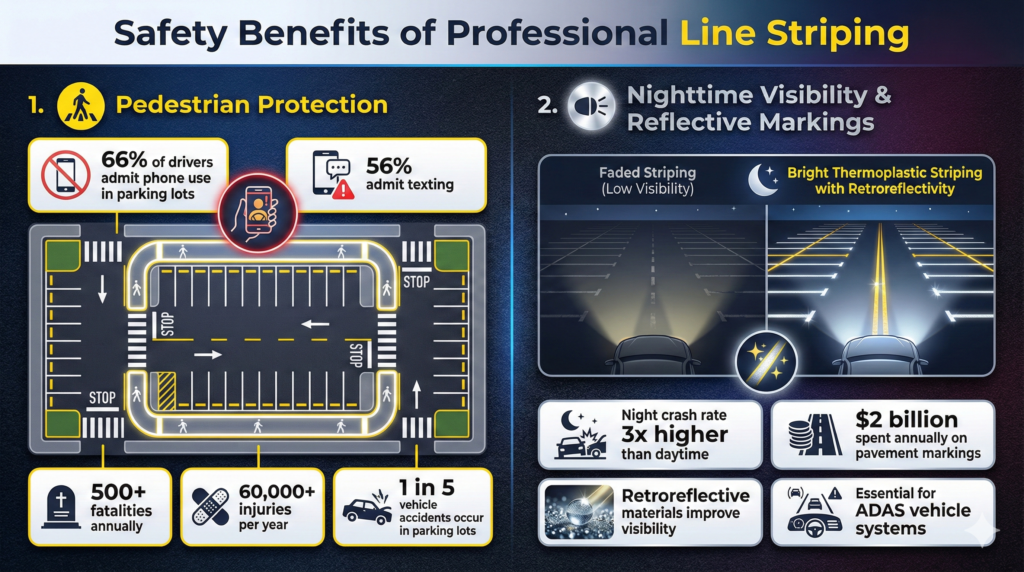
The National Safety Council reports that 66% of drivers admit to making phone calls while driving through parking lots, and 56% admit to texting. With distraction rates that high, visible crosswalks and stop bars become essential safety tools. The NSC also notes that inadequate pavement striping, along with potholes, poor lighting, and missing signage, contributes directly to pedestrian injuries in parking areas.
Each year, over 500 people die and more than 60,000 are injured in parking lot and garage incidents across the United States. Roughly 1 in 5 of all vehicle accidents occurs in a parking lot. Clear line striping won’t eliminate every risk, but it significantly reduces confusion and gives both drivers and pedestrians the guidance they need.
Nighttime Visibility and Reflective Markings
Safety risks increase after dark, when faded or low-quality markings become nearly invisible. Carl K. Andersen, Roadway Team Leader at the FHWA’s Office of Safety Research and Development, has noted through FHWA research that pavement markings serve a unique safety function, communicating information to road users in ways no other traffic control device can. Andersen’s research highlights that the U.S. spends approximately $2 billion annually on pavement markings, and that the nighttime crash rate is roughly three times higher than the daytime rate.
Reflective line striping materials, such as thermoplastic with embedded glass beads, bounce headlight illumination back toward the driver. This retroreflectivity is especially important in South Texas, where sudden rain and low-light conditions can make standard paint markings difficult to see. The FHWA confirms that properly maintained retroreflective pavement markings reduce nighttime crash risk by improving visibility for drivers.
Michael J. Robinson, a General Motors executive, emphasized during testimony before the U.S. House Committee on Transportation and Infrastructure that clearly marked lanes and shoulders are among the most critical highway infrastructure needs, particularly as more vehicles rely on advanced driver-assistance systems (ADAS) that depend on visible pavement markings to function correctly.
How Faded Markings Create Liability Risks
Faded or missing line striping is more than an eyesore. It creates real legal and financial exposure for property owners. When markings are unclear, drivers make poor decisions, pedestrians cross in unsafe areas, and your property becomes a liability.
Parking Lot Accident Statistics Property Owners Should Know
The numbers are sobering. According to the AASHTO Strategic Highway Safety Plan, a highway death from lane departure occurs approximately every 21 minutes in the United States. Nearly 60% of all highway fatalities, totaling more than 25,000 deaths annually, result from vehicles straying from their lanes. AASHTO identifies pavement markings as one of the most cost-effective countermeasures to address this problem, reporting that Missouri’s statewide striping and delineation program contributed to a 25% reduction in lane departure fatalities over a two-year period.
At the parking lot level, approximately 20% of all vehicle accidents in the U.S. happen in parking lots or garages. Faded markings and missing signage are consistently cited as contributing factors in these incidents.
Premises Liability and Property Owner Responsibility in Texas
In Texas, property owners carry direct liability when dangerous conditions on their premises contribute to accidents. Under Texas premises liability law, missing stop signs, faded lane markings, and confusing traffic patterns all create hazardous conditions that owners must address through reasonable maintenance.
If a pedestrian or driver is injured on your property because of poorly marked or non-compliant spaces, your business could face lawsuits for medical bills, lost wages, and property damage. Unlike public roads, parking lots are private property where the owner bears direct responsibility for keeping conditions safe. Maintaining fresh, visible line striping is one of the most straightforward ways to reduce that risk.
ADA Compliance and Line Striping Requirements
Line striping plays a central role in meeting the accessibility requirements set by the Americans with Disabilities Act (ADA). Every commercial parking lot must include properly marked accessible spaces that meet strict federal standards for width, signage, and access routes.
What Does ADA-Compliant Striping Include?
The 2010 ADA Standards for Accessible Design, which remain in effect today, require the following elements in every parking facility:
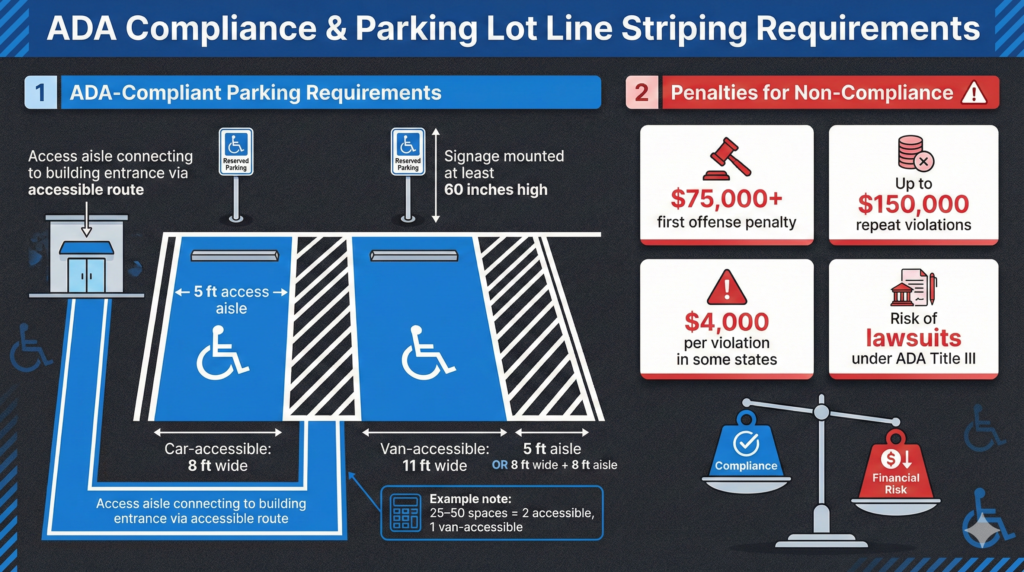
- A minimum number of accessible parking spaces based on total lot size (for example, lots with 25 to 50 spaces need at least two accessible spots, one of which must be van-accessible).
- Car-accessible spaces at least 8 feet wide with a 5-foot access aisle.
- Van-accessible spaces at least 11 feet wide with a 5-foot aisle, or 8 feet wide with an 8-foot aisle.
- The international symbol of accessibility on signage mounted at least 60 inches above the ground.
- Access aisles that extend the full length of the space and connect to an accessible route to the building entrance.
When any business or government facility restripes its parking lot, it must bring its accessible spaces into compliance with these standards. Because restriping is relatively affordable, ADA.gov notes that meeting these requirements is considered “readily achievable” for most properties. For detailed guidance on accessible layouts, see our guide to ADA-compliant line striping and parking lot layouts in Texas.
What Are the Penalties for Non-Compliant Parking Lots?
The financial consequences of ignoring ADA striping requirements can be severe. According to Pavement Solutions, ADA violations can result in penalties of $75,000 or more for a first offense and up to $150,000 for repeat violations. Businesses may also face lawsuits or forced remediation under ADA Title III.
In some states, the fines are even steeper. California, for example, imposes fines starting at $4,000 per individual violation, and individuals who encounter access barriers can file separate lawsuits. While Texas follows the federal standards, non-compliant property owners still face significant financial risk. Keeping your line striping fresh and properly laid out protects your business from these penalties while making your property welcoming and accessible to everyone.
How Often Should You Re-Stripe Your Parking Lot?
Most commercial parking lots in South Texas should be re-striped every 12 to 24 months, depending on traffic volume, weather exposure, and the type of materials used. The intense Texas sun, combined with heavy vehicle traffic, wears down paint faster than in cooler climates.
Signs It’s Time for New Striping
Watch for these indicators that your line striping needs attention:
- Faded or hard-to-see lines that drivers have trouble following, especially at night or in wet conditions.
- Worn directional arrows and stop bars that no longer provide clear guidance.
- ADA spaces that have become unclear, putting you at risk for compliance violations.
- Customer complaints about confusion, difficulty parking, or near-miss incidents in your lot.
- Recent sealcoating or resurfacing work that covered the existing markings.
If you notice any of these signs, scheduling professional line striping sooner rather than later helps you avoid liability issues and keeps your property looking well-maintained. Review our asphalt striping best practices for additional tips.
Choosing the Right Striping Materials for South Texas
Not all striping materials perform the same, and the right choice depends on your traffic volume, budget, and climate conditions. Here’s a quick comparison:
| Feature | Water-Based Paint | Thermoplastic | Epoxy |
| Durability | 12 to 18 months | 3 to 5 years | 2 to 4 years |
| Best For | Low-traffic lots | High-traffic areas | Moderate traffic |
| Reflectivity | Standard | High (glass beads embedded) | Moderate to high |
| Dry Time | 15 to 30 minutes | Sets on cooling | 4 to 6 hours |
| Cost | Lowest | Highest | Mid-range |
| South Texas Heat Resistance | Fair | Excellent | Good |
For most commercial properties in the Bulverde and Hill Country area, water-based traffic paint works well for standard re-striping projects. High-traffic parking lots, loading areas, and fire lanes often benefit from thermoplastic markings, which offer superior durability and reflectivity in South Texas heat.
Protect Your Property with Professional Line Striping
Line striping is one of the most cost-effective investments you can make in your property’s safety, organization, and curb appeal. Clear markings reduce accidents, keep traffic moving efficiently, protect pedestrians, and help you stay compliant with ADA requirements.
Whether you manage a retail parking lot, commercial property, or private roadway in Bulverde or the greater South Texas region, keeping your line striping fresh and professionally applied is a smart long-term investment. Faded markings cost you more in liability exposure, customer frustration, and wasted space than a professional re-striping project ever will.
Ready to get started? Contact C. Brooks Paving for a free consultation on line striping services in Bulverde and across the Hill Country. We’ll evaluate your property, recommend the right materials for your traffic conditions, and deliver durable, professional results. You can also explore our full range of parking lot paving and repair services to keep your property in top shape year-round.