Skip to content





The core difference between permeable vs traditional asphalt comes down to how each surface handles water. Traditional asphalt is a dense, impermeable layer that forces rainwater to sheet off into storm drains and surrounding soil. Permeable asphalt uses an open-graded aggregate mix with interconnected air voids that allow water to pass directly through the pavement and into a stone reservoir bed below.
That single design difference creates a chain of trade-offs in cost, durability, stormwater management, and long-term maintenance. If you’re weighing permeable asphalt vs traditional asphalt for a driveway, parking lot, or commercial surface in the Bulverde or South Texas area, this guide breaks down the facts so you can make a confident decision.
Key Takeaways
- Traditional asphalt costs $5 to $13 per square foot installed, while porous asphalt runs $7 to $13 per square foot, but permeable systems can eliminate the need for separate detention basins and drainage infrastructure.
- A porous asphalt parking lot at Walden Pond in Massachusetts has been in continuous service since 1977 with no repaving, according to the National Asphalt Pavement Association (NAPA).
- Permeable pavement systems reduce total suspended solids in stormwater runoff by approximately 60%, based on U.S. Geological Survey field measurements.
- Permeable asphalt surface temperatures measure roughly 3.9°C (about 7°F) cooler than conventional asphalt during peak summer heat, helping reduce the urban heat island effect.
- Traditional asphalt remains the better choice for high-speed roads, heavy truck traffic, and steep grades, while permeable asphalt performs best in parking areas, driveways, low-speed access roads, and patios.
What Is the Difference Between Permeable and Traditional Asphalt?
Understanding the structural differences between these two materials helps explain why each performs differently. Both start with asphalt binder and aggregate, but the mix design and installation process set them apart.
How Traditional Asphalt Works
Traditional asphalt, also called dense-graded or hot-mix asphalt (HMA), uses a carefully proportioned blend of fine and coarse aggregate bound with liquid asphalt cement. The fine particles fill every gap in the mix, creating a smooth, nearly waterproof surface. This density is what gives conventional asphalt its strength under heavy traffic loads.
When rain falls on traditional asphalt, the water has nowhere to go but sideways. It flows across the surface into curbs, gutters, and storm drains. On properties without proper grading or drainage systems, this runoff can pool near foundations, erode landscaping, or overwhelm municipal stormwater systems.
How Permeable Asphalt Works
Permeable asphalt (also called porous asphalt) uses the same asphalt binder but removes most of the fine aggregate from the mix. The result is an open-graded surface with about 15% to 20% interconnected void space. Water passes through these voids rather than running off the surface.
Below the porous surface layer sits a reservoir base of clean, open-graded stone, typically 18 to 36 inches deep. This stone bed stores water temporarily and releases it into the underlying soil through natural infiltration. According to Federal Highway Administration guidance, properly designed permeable pavement systems can handle infiltration rates of hundreds of inches per hour when new and maintain rates above one inch per hour even after years of sediment accumulation.
How Does Permeable Asphalt Handle Stormwater Compared to Traditional Asphalt?
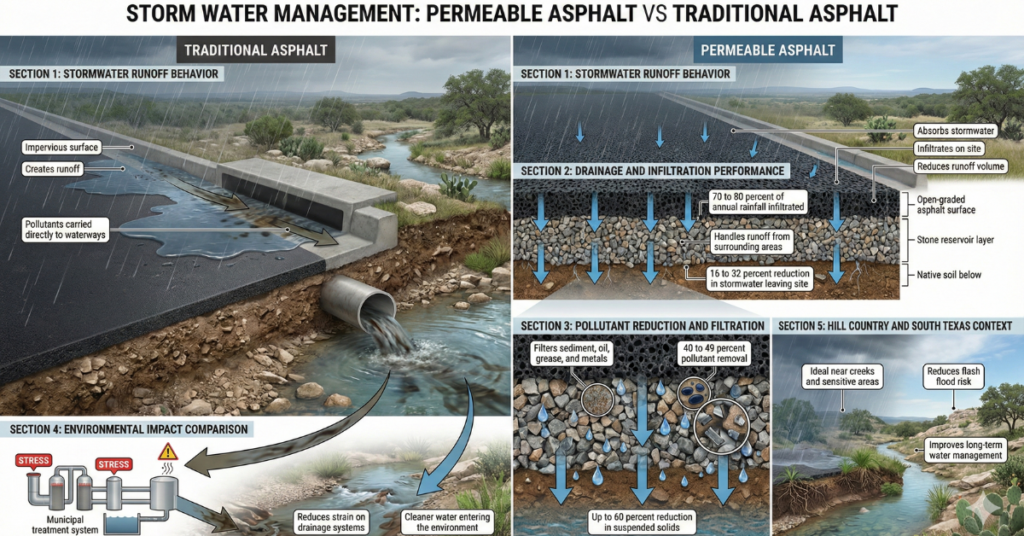
Stormwater management is the defining advantage that separates permeable asphalt vs traditional asphalt. Where conventional pavement creates runoff, permeable pavement absorbs it.
Stormwater Runoff and Drainage Performance
Robert Bowers, P. Eng., LEED Green Associate and Director of Engineering at the Interlocking Concrete Pavement Institute (ICPI), has noted that stormwater drainage ranks as the number one nonpoint source generator of pollution in our waterways. His perspective reflects a growing industry consensus: conventional impervious surfaces concentrate pollutants and push them directly into rivers, lakes, and groundwater supplies.
Permeable pavement flips this equation. Field data from a U.S. Geological Survey study showed that permeable pavement systems reduce total suspended solids (TSS) by approximately 60% across all tested surface types. Some installations demonstrated even greater reductions in specific pollutants, including metals, oils, and grease. Bowers has advocated for a strategy he describes as disconnecting, distributing, and decentralizing stormwater management, and permeable pavement fits that approach perfectly.
Well-designed permeable systems can infiltrate 70% to 80% of annual rainfall on-site. Even in situations where the permeable surface receives runoff from surrounding areas two to seven times its own size, research shows a 16% to 32% reduction in total stormwater volume leaving the property.
Environmental and Water Quality Benefits
Beyond volume reduction, permeable asphalt acts as a filter. As water passes through the open-graded mix and stone reservoir, sediment, grease, oil, and heavy metals are trapped. Studies have measured pollutant removal efficiency between 40% and 49% for common contaminants. This filtering process means cleaner water entering the ground and less strain on municipal treatment systems.
For properties near creeks, rivers, or environmentally sensitive areas in the Hill Country, permeable asphalt supports groundwater recharge rather than adding to surface runoff. This benefit is especially valuable in South Texas, where preventing water damage on asphalt surfaces and managing flash flood risk are ongoing concerns for property owners.
What Does Each Option Cost in 2026?
Cost is usually the first question when property owners compare permeable asphalt vs traditional asphalt. Here’s an honest breakdown of what to expect.
Upfront Installation Costs
According to HomeGuide pricing data, porous asphalt driveways typically cost between $7 and $13 per square foot installed. Traditional asphalt driveways fall in a similar range of $5 to $13 per square foot, based on national contractor estimates from Angi. The gap narrows or widens depending on local material availability, site conditions, and the depth of the reservoir base required for permeable systems.
On average, expect permeable asphalt to cost 10% to 50% more upfront than a comparable traditional installation. The premium comes primarily from the thicker stone base layer, not from the asphalt surface itself.
Long-Term Cost Considerations
The upfront price gap can be misleading. Permeable asphalt can eliminate the need for separate detention basins, retention ponds, or underground stormwater piping. For commercial properties especially, removing those line items from the site development budget can offset or even exceed the higher per-square-foot cost of the pavement itself.
One shopping center owner we worked with faced persistent drainage problems across a 50,000-square-foot parking lot. After investing in a complete resurfacing with an improved drainage system, they eliminated all drainage issues and reduced their annual maintenance costs by 40%, while extending the expected surface life by more than 15 years.
Ongoing maintenance for permeable asphalt includes vacuum sweeping two to four times per year, typically costing $400 to $500 annually for a half-acre lot. Traditional asphalt requires periodic sealcoating (every two to three years) and crack filling but does not need vacuum sweeping. When you’re choosing the best driveway material for your property, factor in the full lifecycle cost, not just the installation quote.
Durability and Lifespan: Which Lasts Longer?
Longevity matters when you’re making a paving investment. Both options deliver solid performance, but the data shows some surprising results for permeable asphalt.
Traditional Asphalt Lifespan and Maintenance
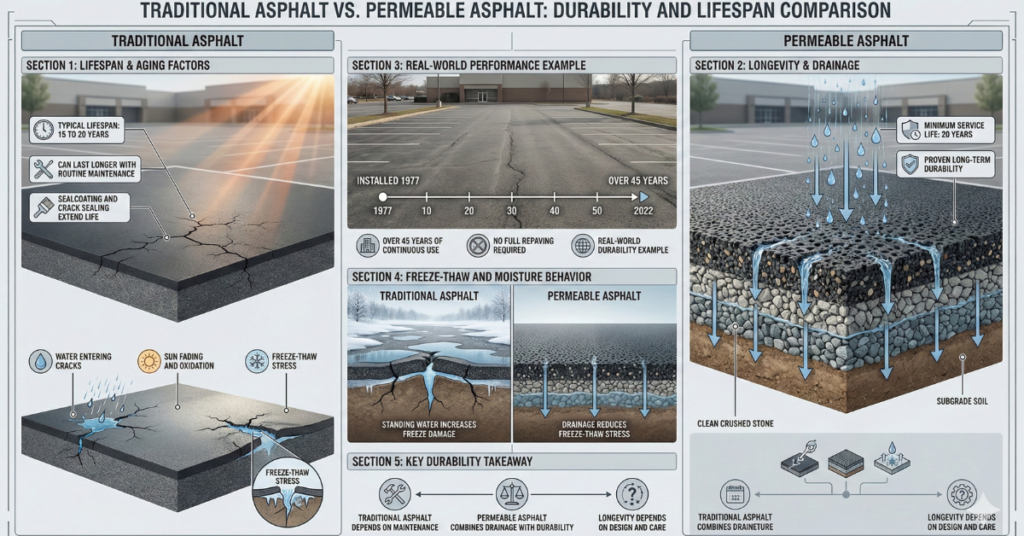
A well-installed traditional asphalt surface typically lasts 15 to 20 years before it needs major rehabilitation or replacement. With regular preventative maintenance like sealcoating, crack sealing, and patching, some surfaces extend well beyond that range. For practical tips on extending the lifespan of your driveway, routine care makes all the difference.
The main threats to traditional asphalt include water infiltration through cracks, UV degradation from sun exposure, and freeze-thaw cycling. In South Texas, the intense summer sun is the primary aging factor, making sealcoating especially important for conventional surfaces.
Permeable Asphalt Longevity and the Walden Pond Example
The National Asphalt Pavement Association (NAPA) states that properly installed and maintained porous asphalt pavements can deliver a minimum service life of 20 years. But one real-world example far exceeds that benchmark.
At Walden Pond State Reservation in Massachusetts, a porous asphalt parking lot installed in 1977 has been in continuous use for over 45 years and has never required full repaving. That kind of longevity challenges the assumption that permeable surfaces sacrifice durability for drainage. One reason for this resilience: permeable asphalt reduces freeze-thaw damage because water drains through the surface rather than sitting on top where it can expand and crack the pavement.
Which Is Better for South Texas Properties?
Local conditions play a major role when deciding between permeable asphalt vs traditional asphalt. The Bulverde and Hill Country area presents both opportunities and challenges for permeable systems.
Climate and Soil Considerations for the Hill Country
The Texas General Land Office Stormwater Manual includes specific guidance on using permeable pavement in South Texas. For a permeable system to work effectively, the underlying soil needs a permeability rate of at least 0.5 inches per hour, and there should be at least four feet of clearance between the bottom of the stone base and bedrock or the seasonal high water table.
Parts of the Hill Country have rocky limestone substrates that may limit natural infiltration. In those cases, permeable systems can be designed with underdrain piping that captures filtered water and redirects it to an approved discharge point. A qualified contractor experienced with asphalt paving in South Texas can evaluate your specific soil and site conditions before recommending an approach.
Heat Island Reduction Benefits in Texas
South Texas summers regularly push air temperatures above 100°F, and conventional asphalt absorbs and radiates that heat. According to the U.S. Environmental Protection Agency, a pilot study in Arizona found that conventional asphalt surface temperatures can reach up to 152°F at mid-day, while cool pavement surfaces measured 10 to 16°F lower.
Field research on permeable asphalt specifically has shown surface temperatures approximately 3.9°C (about 7°F) cooler than dense-graded asphalt during summer peaks. The cooling comes from evaporation: moisture stored in the stone reservoir below the surface evaporates upward, pulling heat out of the pavement. For large parking areas and commercial properties, this temperature reduction improves comfort for pedestrians and can lower cooling costs for adjacent buildings.
How to Decide Which Asphalt Type Fits Your Property
Neither option is universally better. The right choice depends on your property type, traffic patterns, budget, and stormwater priorities.
Best Applications for Traditional Asphalt
- High-traffic roads and highways with heavy truck loads
- Steep grades and sloped surfaces where drainage naturally flows away from structures
- Budget-sensitive projects where upfront cost is the primary concern
- Properties with existing stormwater infrastructure that handles runoff effectively
Best Applications for Permeable Asphalt
- Parking lots, driveways, and low-speed access roads
- Properties with poor drainage or standing water issues
- Sites near waterways, wells, or environmentally sensitive areas
- Commercial developments looking to reduce stormwater infrastructure costs
- Properties where local regulations require on-site stormwater management
For commercial property owners, planning parking lot paving for your business involves weighing these factors alongside tenant needs and long-term maintenance plans.
Permeable vs Traditional Asphalt: Side-by-Side Comparison
| Feature | Traditional Asphalt | Permeable Asphalt |
| Cost per sq ft | $5 – $13 | $7 – $13 |
| Typical lifespan | 15 – 20 years | 20+ years (45+ documented) |
| Stormwater runoff | 100% surface runoff | Infiltrates 70-80% on-site |
| TSS reduction | None | ~60% (USGS data) |
| Surface temperature | Up to 152°F peak | 10-16°F cooler |
| Maintenance | Sealcoat every 2-3 years | Vacuum sweep 2-4x/year |
| Best for | Roads, heavy traffic | Parking, driveways, patios |
| Drainage infrastructure | Required separately | Built into pavement system |
Make the Best Decision for Your Property
Choosing between permeable asphalt vs traditional asphalt starts with understanding your property’s specific needs. Traditional asphalt remains the durable, cost-effective standard for high-traffic roads and budget-focused projects. Permeable asphalt offers superior stormwater management, longer potential lifespan, and measurable heat reduction, all of which can add up to lower total cost of ownership on the right property.
The best path forward is a professional site evaluation. Soil conditions, drainage patterns, traffic loads, and local regulations all influence which material will deliver the best long-term performance for your investment.
Ready to find out which option fits your property? Contact C. Brooks Paving for a free consultation. Our team serves Bulverde and the greater South Texas Hill Country region with expert paving solutions tailored to local conditions.