 Skip to content
Asphalt Paving and Chip Seal Contractor Serving Pleasanton , South Texas, and the Hill Country Corridor from Bulverde













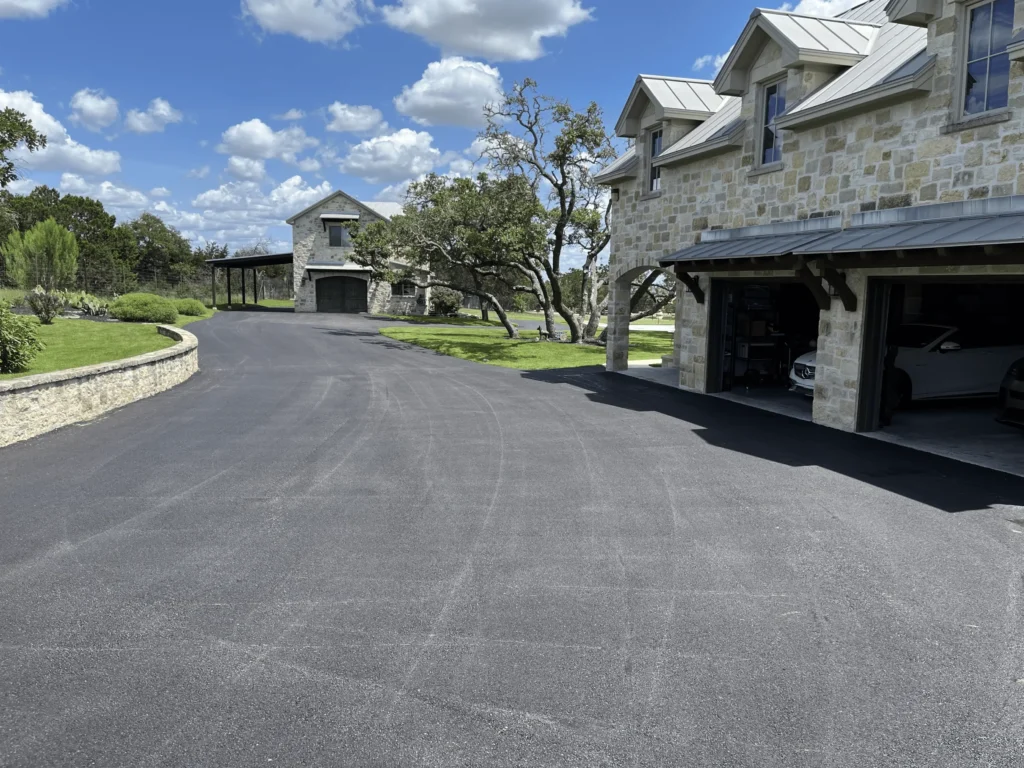
Professional Asphalt Paving Services in Pleasanton, TX
Pleasanton is the Atascosa County seat, a South Texas city of approximately 10,000 residents on US-281 about 35 miles south of San Antonio, well south of the Hill Country’s Balcones Escarpment and firmly in the South Texas Plains. The city is known as the “Birthplace of the Cowboy,” a historical designation reflecting Atascosa County’s documented role in the origins of the Texas cattle drive industry in the mid-1800s, when the open-range cattle culture that defined South Texas and eventually the entire American West first took organized form in this part of the state. Pleasanton and Atascosa County have maintained a ranching and agricultural identity alongside a growing commercial and industrial economy driven in large part by the Eagle Ford Shale, the South Texas oil and gas formation that runs through Atascosa County and whose exploration and production activity has brought significant heavy truck and industrial vehicle traffic to the county road and commercial paving infrastructure throughout the region since the early 2010s. The combination of cattle ranching, retail and commercial development along US-281 and SH-97, and the ongoing oil and gas sector activity makes Pleasanton’s paving market the most industrially influenced in the C. Brooks service area.
C. Brooks Paving reaches Pleasanton from our Bulverde base in approximately 50-55 minutes south on US-281, through Bulverde and Blanco Road south to Pleasanton, one of the more direct routes in our South Texas service corridor. Pleasanton is the southernmost active service area location along the US-281 corridor and the most distinctly South Texas community in the service area: flat to gently rolling South Texas Plains terrain, Vertisol clay soils rather than Hill Country limestone and caliche, minimal freeze cycling, and the heat-dominated climate of the interior South Texas brush country. We provide a written estimate covering sub-grade conditions, surface type, and drainage approach before any work begins.
get A FREE quote !
Complete Asphalt Paving Solutions for Pleasanton Properties
Residential Driveway and Ranch Property Paving for Pleasanton and Atascosa Coun
Pleasanton's residential paving market combines in-town residential with the rural ranch and acreage properties that spread across Atascosa County's South Texas ranchland. In-town Pleasanton has established residential neighborhoods on Vertisol clay soils, the deep, dark, expansive clay that is the defining sub-grade characteristic of South Texas and the direct opposite of the Hill Country's limestone and caliche. Vertisol clay expands significantly when wet and shrinks when dry, producing the foundation movement and pavement cracking patterns that are a constant maintenance factor for any paved surface on South Texas residential sub-grade. A properly designed residential driveway on Pleasanton Vertisol clay requires adequate base depth and drainage to manage the moisture cycling that drives clay expansion and contraction throughout the year.
For the rural ranch and acreage properties of Atascosa County, the South Texas brush country ranches on sandy loam and clay soils that extend across the county's flat to gently rolling terrain, chip seal on native caliche or sandy loam sub-grade (where present at adequate depth) is a cost-effective option for access roads and rural driveways. Atascosa County's clay-dominant ranch terrain requires base preparation that addresses the same Vertisol expansion-contraction challenge as in-town residential, but at the lower traffic loads of rural ranch access. We assess sub-grade type and moisture condition at every Pleasanton site visit before recommending any surface treatment. See our chip seal page and residential paving solutions.
Commercial Paving for Pleasanton's US-281 Corridor, Eagle Ford Service Sector, and Retail Businesses
Pleasanton's commercial paving market is the most diverse in the C. Brooks service area south of San Antonio. The US-281 commercial corridor through Pleasanton, connecting San Antonio to the south toward Three Rivers and Corpus Christi, carries steady through-traffic that serves the retail, fuel, and service businesses in Pleasanton's commercial district. SH-97 extends east-west through Pleasanton connecting to Kenedy and the Eagle Ford Shale producing areas of Karnes County. These two highway corridors make Pleasanton a commercial hub for a wide area of South Texas, businesses here serve not only local Atascosa County residents but the agricultural, ranching, and oil and gas workforce throughout the surrounding region.
The Eagle Ford Shale activity that has operated in and around Atascosa County since the early 2010s has created a commercial paving dynamic specific to South Texas energy-producing areas: heavy oilfield service trucks, water hauling vehicles, and equipment transport vehicles on commercial lots, caliche pad access roads, and county roads throughout the area. Commercial paving in Pleasanton and Atascosa County must be specified for the heavy vehicle loads of the oilfield service sector as well as the standard retail and commercial traffic. ADA-compliant accessible parking to Americans with Disabilities Act standards applies to all public-access commercial properties on the US-281 and SH-97 corridors. See our parking lot paving page.
City of Pleasanton and Atascosa County Road Infrastructure Paving
As the Atascosa County seat, Pleasanton maintains the city street infrastructure for its commercial and residential districts while the Atascosa County Precinct road departments maintain the county road network that connects the rural ranch, agricultural, and oilfield properties across the county's approximately 1,230 square miles. Eagle Ford Shale oil and gas activity has had a documented impact on Atascosa County road infrastructure, the heavy truck traffic associated with oilfield operations has accelerated surface deterioration on county roads that were designed for agricultural and light vehicle loads, creating an ongoing county road maintenance challenge that extends across the South Texas energy-producing region.
The City of Pleasanton maintains the street network for a municipality with active commercial growth on US-281 and SH-97, new residential subdivision development on the city's expanding edges, and the institutional infrastructure of a county seat, courthouse, school district, and city government facilities. Municipal street resurfacing and commercial corridor improvements in Pleasanton follow TxDOT specifications where state funding and material compliance standards apply. See our municipal paving projects page.
Asphalt Repair and Maintenance on Pleasanton's South Texas Vertisol Clay
Pleasanton's existing paved surfaces deteriorate through a different set of primary mechanisms than the Hill Country communities in the C. Brooks service area. Freeze-thaw cycling is minimal, Pleasanton's South Texas position means very few freeze events per year and almost no thermal crack initiation from frost. Instead, the dominant deterioration mechanisms are UV oxidation and binder hardening from intense South Texas summer heat, thermal expansion cracking from high surface temperatures during July and August (asphalt surface temperatures regularly exceed 140°F in South Texas summer conditions), and Vertisol clay sub-grade expansion and contraction cycling that applies upward and lateral movement pressure to pavement from below throughout the wet and dry seasons.
According to the Asphalt Pavement Alliance, maintained asphalt achieves 25-30 year service life compared to 10-12 years for neglected surfaces. In Pleasanton's climate, the most critical maintenance action is sealcoating every 3-4 years to block UV oxidation and prevent binder hardening, more frequent than the Hill Country communities because South Texas summer heat intensity is higher and UV exposure is greater at lower elevation. Crack sealing before the fall wet season, when Vertisol clay absorbs rainfall after summer dry-season contraction, prevents water from entering open cracks and softening the base during clay expansion events. See our asphalt crack repair page and sealcoating services.
Asphalt Solutions Built for Pleasanton's Unique Environment
South Texas Plains: Flat Terrain, Expansive Clay, and Atascosa River Drainage
Pleasanton's terrain is the most different from the rest of the C. Brooks service area of any location in the network, South Texas Plains flat-to-gently-rolling topography, entirely south of the Balcones Escarpment that marks the Hill Country's southern edge, with none of the limestone ridge-and-valley topography that defines the Hill Country communities from Kerrville to Wimberley. The Atascosa River flows through Atascosa County in a shallow, flat-bottomed valley that drains south toward the Frio River, a slow-moving South Texas river without the dramatic flash flood canyon hydrology of the Hill Country river systems. The flat terrain and clay-dominated soils create a drainage challenge that is the opposite of the Hill Country's problem: rather than water running off limestone too fast, Pleasanton's Vertisol clay is low-permeability, water moves slowly through the soil profile, and surface drainage must be designed to move runoff laterally off the pavement quickly before it pools on the low-permeability surface and softens the base through extended contact.
This flat, low-permeability terrain means that slope and crown design for Pleasanton pavement is about positive drainage at minimal grade, ensuring the small but consistent slope that moves water off the surface on flat terrain, rather than the steep-slope edge containment challenges of the Hill Country. Every Pleasanton commercial parking lot and driveway requires drainage design that accounts for the Vertisol clay's low-permeability character and the flat terrain's limited natural slope.
South Texas Summer Heat, UV Intensity, and Atascosa County's Hot-Climate Binder Specification
Pleasanton's climate is the hottest in the C. Brooks service area, South Texas summer conditions that produce pavement surface temperatures regularly exceeding 140°F in July and August, with sustained high temperatures that last longer into the day and earlier in the season than any Hill Country community. The binder specification for Pleasanton pavement is weighted entirely toward high-temperature performance: low-temperature flexibility for freeze-thaw cycling is not a meaningful specification driver here (minimal freeze events per year), while high-temperature shear resistance is the primary performance requirement. The Asphalt Institute's SuperPave performance-graded binder system specifies a higher PG binder grade for the South Texas climate than for any Hill Country location in the service area, the hot-climate end of the binder performance range.
UV radiation intensity at Pleasanton's lower South Texas elevation, combined with the high surface temperatures and the absence of the moderate temperatures that the Hill Country's elevation provides, accelerates binder oxidation faster than in the Hill Country communities. Sealcoating as a UV barrier is more critical and more frequent at Pleasanton than anywhere else in the service area, it is the primary tool for extending binder life in the South Texas sun.
Atascosa County Vertisol Clay: South Texas's Most Demanding Sub-Grade for Pavement
The sub-grade in Pleasanton and Atascosa County is Vertisol clay, the deep, dark, expansive clay that is the defining soil type of the South Texas Plains and the most challenging sub-grade material in the C. Brooks service area for pavement performance. Vertisol clay expands significantly when wet (absorbing water from rainfall events and groundwater) and shrinks and cracks when dry (losing moisture during South Texas summer drought periods). This expansion and contraction cycling is continuous throughout the year in South Texas, and it applies vertical and lateral movement pressure to any pavement surface from below.
The pavement design response to Vertisol clay in Pleasanton is consistent across all surface types: adequate base depth and quality to distribute load and reduce the clay sub-grade's ability to transfer movement to the surface, drainage design that keeps water away from the base and sub-grade to minimize expansion events, and flexible surface materials (asphalt rather than rigid concrete) that can accommodate the minor movement that reaches the surface despite the base. The same Vertisol clay challenge appears in Hondo, Castroville, Lytle, and Devine in the C. Brooks service area, but Pleasanton is further south, in a drier climate with more pronounced wet-dry cycling, making the Vertisol expansion-contraction amplitude here slightly more extreme than in those northern Medina County communities.
Asphalt vs. Concrete for Pleasanton Properties
Asphalt's Performance Advantage on Atascosa County's Expansive Vertisol Clay
The case for asphalt over concrete in Pleasanton is driven primarily by the Vertisol clay sub-grade argument, and it is the strongest version of this argument in the C. Brooks service area. Concrete's rigidity makes it highly vulnerable to the upward and lateral movement that Vertisol clay sub-grade produces during expansion events. Concrete panels on Vertisol clay crack at the joints and panel edges as the clay expands beneath them, creating the classic South Texas pavement failure pattern visible on older concrete surfaces throughout Atascosa County and the surrounding region. Asphalt's flexible bituminous structure accommodates minor sub-grade movement without panel cracking, the surface deforms slightly under clay movement but remains intact where concrete cracks.
For the commercial lots and driveways serving Pleasanton's Eagle Ford-related oilfield service businesses, asphalt's repairability under the heavy truck loads of oilfield vehicle traffic is also a practical advantage. Localized damage from heavy truck loads on commercial surfaces like ruts, depressions, and edge damage at truck access points, can be addressed with asphalt patching and resurfacing without requiring the full-panel replacement that comparable concrete damage involves.
Concrete Applications for Pleasanton's Commercial and Industrial Properties
Even on Pleasanton's Vertisol clay sub-grade, concrete is the right material for specific high-load and chemical-exposure structural applications. Industrial facilities serving the oilfield service sector, equipment yards, vehicle maintenance facilities, and chemical storage pad areas where fluid exposure and heavy stationary equipment loads are the design conditions, require concrete's compressive strength and chemical resistance that asphalt cannot match. Concrete at these commercial industrial pad applications is correctly specified despite the Vertisol clay sub-grade, because the structural engineering for an industrial concrete slab on Vertisol clay (deep base, sub-grade stabilization, and post-tension reinforcement where warranted) makes it a viable application.
For the established commercial properties along US-281 and SH-97, grocery stores, retail centers, and the institutional properties of the county seat such as concrete walkways, ADA-accessible ramps, and entry hardscape where pedestrian durability and appearance are the performance requirements are appropriate alongside asphalt parking fields. The combination of a concrete pedestrian zone and asphalt parking field is common in commercial South Texas properties and is the specification we often recommend for larger Pleasanton commercial sites.
Chip Seal for Atascosa County Ranch Access Roads and Rural Driveways
Chip seal is the right recommendation for the rural ranch and acreage property driveways and access roads on Atascosa County's South Texas ranchland, where the flat-to-rolling sandy loam and caliche sub-grade of the upland ranch positions (away from the deeper Vertisol clay of the in-town and bottomland positions) provides adequate bearing capacity for chip seal surface treatment at the light-to-moderate loads of ranch residential and agricultural traffic. Atascosa County ranch access roads, from county roads to ranch headquarters on the South Texas brush country ranchland, carry pickup truck, livestock trailer, and farm vehicle loads that chip seal on an adequately prepared native sub-grade handles well.
The distinction for Pleasanton chip seal compared to Hill Country chip seal is the sub-grade type: the sandy loam and caliche at Atascosa County ranch upland positions is less consistent than Edwards Plateau caliche, and the Vertisol clay present in some low-lying ranch positions requires base preparation that addresses expansion-contraction cycling before chip seal is viable. We assess sub-grade type and position (upland sandy loam vs. low-lying clay) at every Pleasanton rural site visit. For the in-town residential market, full hot-mix asphalt with adequate base is the standard recommendation because of the Vertisol clay sub-grade and higher daily traffic levels. See our chip seal page and private roads paving page.
Our Professional Asphalt Paving Process in Pleasanton
Free Estimate & Site Visit
We’ll come out, look at the project, and give you a clear price.
Proposal
We will gather all the information and provide you with a detailed scope of the project that fits within your budget and timeline
Construction
The work is scheduled and construction begins while you are kept in the loop every step of the way
Free Estimate & Site Visit
We’ll come out, look at the project, and give you a clear price.
Proposal
We will gather all the information and provide you with a detailed scope of the project that fits within your budget and timeline
Construction
The work is scheduled and construction begins while you are kept in the loop every step of the way
Why Pleasanton Property Owners Choose C. Brooks Paving

How does Castroville's climate affect asphalt durability?
Proudly serving Hill country, South & Central Texas. Licensed, insured, and bonded so you’re always covered.
Guaranteed Work, Backed by Passion
We don’t just show up — we love what we do and it shows.
Top-Tier Equipment
We use advanced machinery to deliver unmatched asphalt & chip seal services.
4 Generations of Experience
A legacy built on quality, trust, and results.
Owner On Every Job
Courtnay Brooks is hands-on, making sure every detail’s done right.

Frequently Asked Questions
How does Pleasanton's climate affect asphalt durability?
Pleasanton’s climate is the hottest in the C. Brooks service area, well south of the Hill Country, with pavement surface temperatures regularly exceeding 140°F in July and August. The primary deterioration mechanisms here are UV binder oxidation from intense South Texas sun and high-temperature surface deformation from sustained summer heat, not freeze-thaw cycling (which is minimal at Pleasanton’s South Texas position). Sealcoating is the most critical maintenance action in this climate, it blocks UV penetration and slows binder hardening. The Vertisol clay sub-grade adds a seasonal expansion-contraction mechanism that applies movement pressure to the pavement from below during wet and dry cycling.
How long will an asphalt driveway or parking lot last in Pleasanton?
A properly installed and maintained asphalt surface in Pleasanton should last 20-30 years. The key variables in South Texas are: adequate base depth to isolate the pavement from Vertisol clay sub-grade movement, high-temperature binder specification for South Texas summer conditions, drainage design that keeps water away from the base during clay expansion events, and a 3-4 year sealcoating schedule to counter the UV oxidation that South Texas sun intensity accelerates. Commercial surfaces with heavier traffic, including oilfield service vehicle traffic on Atascosa County commercial lots, benefit from a 3-year sealcoating schedule and proactive crack sealing before each fall wet season.
Is chip seal right for my Pleasanton property?
For rural ranch and acreage property driveways on Atascosa County’s upland sandy loam and caliche terrain, yes, chip seal is a cost-effective recommendation. For in-town Pleasanton residential driveways on Vertisol clay sub-grade with regular daily traffic, full hot-mix asphalt with adequate base is the right recommendation. Chip seal requires adequate bearing capacity in the native sub-grade, and Vertisol clay in a residential setting with daily traffic does not provide that consistently without extensive base preparation that narrows the cost gap between chip seal and hot-mix. We assess sub-grade type, upland sandy loam vs. clay, at every Pleasanton site visit before recommending.
Do you pave commercial lots for oilfield service businesses in Pleasanton?
Yes. Commercial lots and access roads serving the Eagle Ford Shale oil and gas service sector in Atascosa County are part of our regular commercial scope. Oilfield service company yards, equipment storage lots, and the commercial properties serving the oilfield workforce on US-281 and SH-97 require base depth specified for heavy truck and equipment loads, not standard retail parking lot specification. We scope these projects with base depth matched to the vehicle load profile and surface drainage matched to flat South Texas terrain. See our parking lot paving page and heavy duty asphalt paving page.
Proudly Serving Pleasanton and Surrounding Communities
- We proudly serve: