Skip to content





The right paving solution for your property depends on three core factors: your budget, how the surface will be used, and your local climate. Asphalt is the most affordable option for residential driveways and parking lots, concrete delivers the longest lifespan in hot climates like South Texas, and chip seal (tar and chip) provides a cost-effective surface for rural roads and ranch driveways.
A licensed paving contractor can evaluate your property’s drainage, soil conditions, and traffic needs to recommend the best material for long-term performance.
Key Takeaways
- Asphalt costs $5 to $12 per square foot, installs in one to two days, and lasts 15 to 30 years with proper sealcoating every three to five years
- Concrete runs $6 to $15 per square foot, lasts 30 to 40+ years, and handles South Texas heat without softening
- Chip seal (tar and chip) costs $2 to $5 per square foot, lasts 7 to 15 years, and is ideal for long rural driveways and ranch roads in the Hill Country
- Base preparation and drainage matter more than the surface material itself, with poor drainage being the leading cause of premature pavement failure
- A professionally paved driveway can add $5,000 to $20,000 in property value and increase curb appeal by up to 7%
What Is the Best Paving Material for Residential and Commercial Properties?
Choosing a paving material starts with understanding how each option performs under real-world conditions. Every surface has trade-offs between cost, durability, maintenance, and appearance. Here is what you need to know about the three most common paving solutions used across Bulverde and the greater South Texas region.
Asphalt Paving: Fast, Flexible, and Cost-Effective
Asphalt is the most widely used paving material for driveways and parking lots in the United States. It combines stone aggregate, sand, and a petroleum-based binder to create a smooth, durable surface. According to NerdWallet, the average asphalt driveway installation costs around $5,258, with typical costs ranging from $7 to $15 per square foot including labor.
Asphalt installs quickly, often in just one to two days for a standard residential driveway. It also flexes with temperature changes, making it a strong performer in climates with freeze-thaw cycles. However, in South Texas, the intense summer heat can soften asphalt and lead to rutting under heavy loads. Regular sealcoating every two to three years is essential to protect the surface from UV damage and oxidation.
“In South Texas, asphalt surface temperatures can top 150 degrees Fahrenheit during peak summer months,” says Courtnay Brooks, Owner and Fourth-Generation Paving Specialist at C. Brooks Paving. “That kind of heat accelerates oxidation, so choosing the right asphalt mix and staying on top of sealcoating makes a huge difference in how long your surface lasts.”
For a deeper look at how asphalt performs in this region, check out our complete guide to asphalt paving in South Texas.
Concrete Paving: Durable and Low-Maintenance
Concrete driveways are a mid-range to premium investment that pays off over time. Installation typically costs $6 to $15 per square foot, but concrete surfaces can last 30 to 40 years or more with minimal upkeep. Some properly maintained concrete driveways last beyond 50 years, according to Angi.
Concrete excels in hot climates because it remains stable under extreme temperatures. Unlike asphalt, it won’t soften or become tacky in the Texas sun. The material also reflects heat rather than absorbing it, which keeps the surface cooler underfoot. On the downside, concrete costs more to install and repair, and installation takes three to five days including curing time before the surface can handle vehicle traffic.
Modern decorative options like stamping, staining, and exposed aggregate finishes allow homeowners to customize their concrete driveway’s appearance. For property owners comparing their options, our article on weighing asphalt vs. concrete for your project breaks down the details.
Chip Seal (Tar and Chip): The Affordable Rural Option
Chip seal paving, also known as tar and chip, combines a layer of hot liquid asphalt with crushed stone aggregate to create a textured, skid-resistant surface. At just $2 to $5 per square foot, chip seal costs 30% to 40% less than traditional asphalt, making it a smart choice for long rural driveways and ranch roads.
Chip seal driveways typically last 7 to 15 years depending on traffic volume and maintenance. They require little ongoing upkeep since they don’t need sealcoating like standard asphalt. The textured surface also provides excellent traction in wet conditions, which is a practical advantage for Hill Country properties with sloped or winding driveways.
The rustic look of chip seal blends naturally with rural and suburban landscapes. Property owners can choose from a variety of stone colors and sizes for a customized appearance. Learn more about this option in our guide to the benefits of chip seal driveways for rural roads.
How Do Asphalt, Concrete, and Chip Seal Compare Side by Side?
This comparison table summarizes the key differences between the three most common paving solutions to help you make an informed decision.
| Factor | Asphalt | Concrete | Chip Seal |
| Cost per sq ft | $5 to $12 | $6 to $15 | $2 to $5 |
| Lifespan | 15 to 30 years | 30 to 40+ years | 7 to 15 years |
| Installation time | 1 to 2 days | 3 to 5 days | 1 day |
| Maintenance | Sealcoat every 2 to 3 years | Minimal (occasional cleaning) | Minimal (no sealcoating needed) |
| Heat resistance | Softens in extreme heat | Stays stable in high temps | Moderate heat tolerance |
| Best for | Budget-friendly driveways, parking lots | Long-term investment, hot climates | Rural driveways, ranch roads |
| Curb appeal | Smooth, uniform black finish | Customizable (stamps, stains) | Rustic, natural stone look |
| Repair ease | Easy and affordable to patch | Harder and more expensive | Requires full section reapplication |
What Factors Should You Consider Before Choosing a Paving Solution?
Every property is different. What works for a suburban driveway in Bulverde may not be the right fit for a commercial parking lot in Boerne or a ranch road near Fredericksburg. These three factors should guide your decision.
Climate and Weather Conditions in South Texas
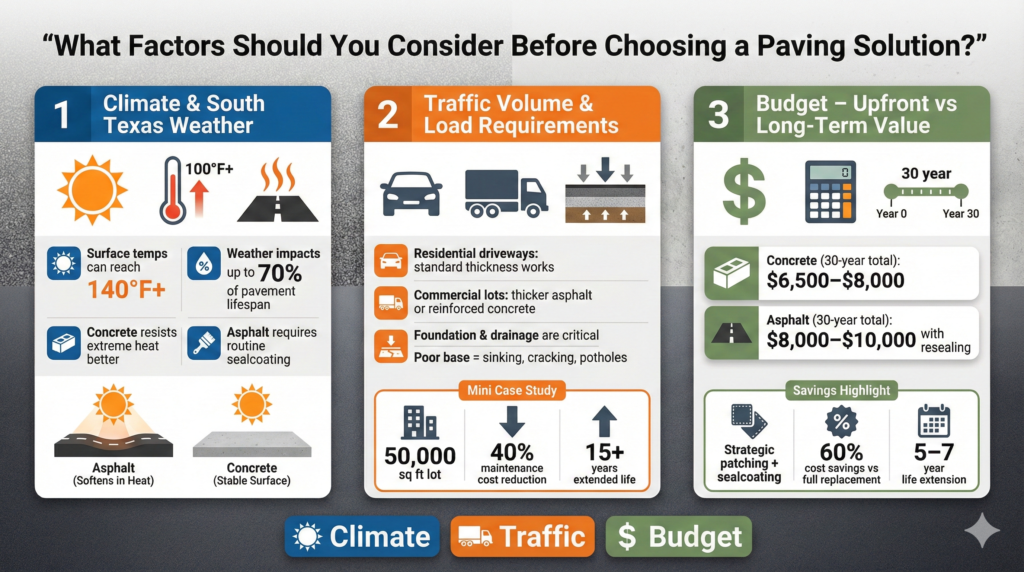
South Texas presents unique challenges for any paved surface. Summer temperatures regularly push into triple digits, and asphalt surfaces can reach 140 degrees Fahrenheit or higher on sunny days, according to Asphalt Services & Construction. Research from Bennett Paving suggests that weather conditions can affect up to 70% of asphalt’s overall lifespan.
For properties that receive heavy sun exposure, concrete holds up better because it doesn’t soften under heat. If you’re working within a tighter budget, asphalt with a proper sealcoating schedule is a reliable alternative. For more on how heat affects surfaces in this region, read our article on the impact of South Texas heat on your pavement.
Traffic Volume and Load Requirements
The amount and type of traffic your surface handles directly impacts which material is right for you. Residential driveways serving standard passenger vehicles can perform well with any of the three options. However, commercial parking lots, heavy truck access roads, and industrial surfaces need thicker asphalt or reinforced concrete to withstand heavier loads.
“The single most important factor in pavement life is the foundation,” notes Frank Harrison, owner of Frank Harrison Paving, a commercial paving contractor. “A thorough assessment of the sub-grade, proper drainage, and a stable base prevents the most common issues like sinking, cracking, and potholes.”
One shopping center owner we worked with experienced exactly this kind of challenge. Their 50,000-square-foot parking lot had deteriorating asphalt with multiple potholes and drainage problems. After a complete resurfacing with an improved drainage system, they eliminated all drainage issues, reduced annual maintenance costs by 40%, and extended the surface life by over 15 years.
Budget: Upfront Costs vs. Long-Term Value
The least expensive option upfront is not always the most cost-effective over time. According to cost analysis data from Bart’s Asphalt, a 600-square-foot concrete driveway costs $6,500 to $8,000 over 30 years, compared to $8,000 to $10,000 for asphalt when you factor in resealing every three to five years at $300 to $800 per treatment.
A homeowner we worked with faced this exact decision. Their 20-year-old driveway had severe cracking, and full replacement would have been a significant expense. By choosing strategic patching of major cracks followed by professional sealcoating, they extended the driveway’s life by 5 to 7 years at 60% cost savings compared to a full replacement.
Why Is Base Preparation the Most Important Part of Any Paving Project?
No matter which paving material you choose, the foundation underneath determines how long that surface will last. A perfectly applied asphalt or concrete surface will fail prematurely if the sub-base is weak, improperly compacted, or poorly drained.
How Drainage and Grading Affect Pavement Longevity
Water is the number one enemy of any paved surface. Standing water seeps into cracks, erodes the base layer, and leads to potholes, heaving, and structural failure. According to paving industry professionals at Wolf Paving, the sub-base is actually the most important part of any new asphalt surface, and proper water drainage is vital because water is a major cause of damage.
Dr. Kamil Kaloush, Professor of Sustainable Pavement Engineering at Arizona State University, has published extensive research on pavement durability. His studies with the National Center for Asphalt Technology confirm that properly designed drainage systems and compacted sub-bases are the strongest predictors of long-term pavement performance, regardless of the surface material selected.
Professional contractors use laser-guided grading equipment to ensure water flows away from structures and off the paved surface. In South Texas, where intense rainstorms can dump significant water in short periods, proper grading is not optional – it’s essential.
What Happens When the Sub-Base Is Done Wrong
When the base layer is weak or improperly compacted, you’ll see problems within the first few years. Cracking, sinking, potholes, and alligator patterns all trace back to foundation issues. The initial savings from cutting corners on base preparation almost always disappear with frequent repair costs down the road.
For commercial properties, the stakes are even higher. Parking lots and access roads handle heavier loads, which magnify any weakness in the sub-base. That’s why a proper site evaluation before any paving work begins is critical to getting the most value from your investment.
How Does a New Paved Surface Affect Your Property Value?
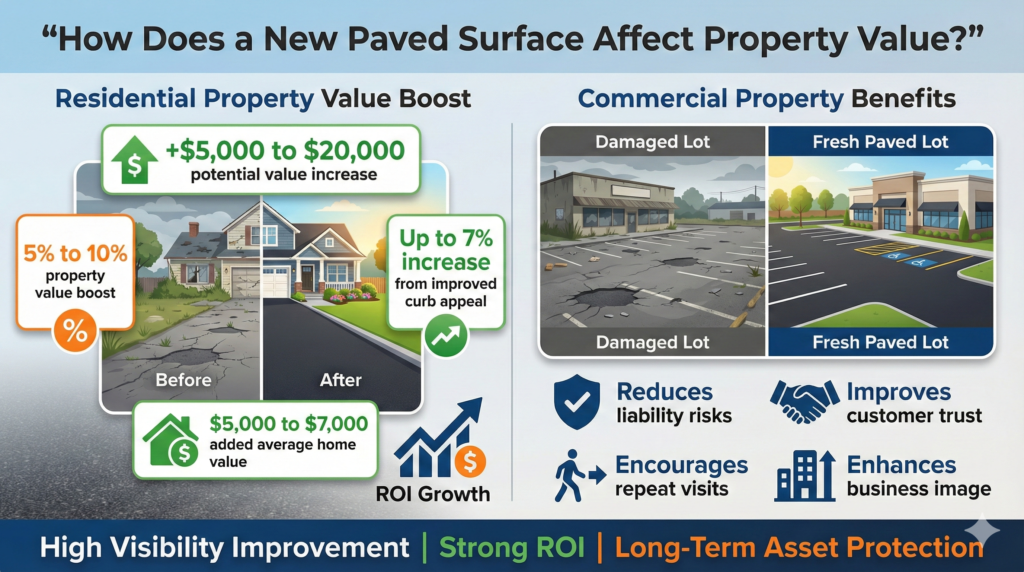
A professionally paved driveway or parking lot is one of the most visible improvements you can make to any property. According to research from FastExpert, driveway improvements can boost home value by $5,000 to $20,000, representing a potential 5% to 10% increase in property value. Curb appeal alone can raise the perceived value of a property by up to 7%.
Data from Angi confirms that a paved driveway adds $5,000 to $7,000 to the average home’s value. That return makes paving one of the highest-ROI exterior improvements available to homeowners.
For commercial property owners, a well-maintained parking lot sends a strong signal about the quality of the business inside. Cracked, pothole-filled surfaces create liability risks and drive customers away, while a smooth, well-striped lot builds trust and encourages repeat visits.
How to Choose the Right Paving Contractor in South Texas
The quality of your paving project depends just as much on who does the work as it does on the materials you select. Here’s what to look for when evaluating contractors in the Bulverde and Hill Country area.
Key Questions to Ask Before Hiring
Before signing any agreement, ask potential contractors these questions:
- Are you licensed and insured? Verify liability insurance and workers’ compensation coverage to protect yourself from financial risk during the project.
- Can you provide references and examples of similar projects? A reputable contractor will have a portfolio of completed work and satisfied customers.
- What does your quote include? Make sure the estimate covers site preparation, grading, drainage, materials, labor, and cleanup. The National Asphalt Pavement Association (NAPA) recommends getting at least three detailed quotes before making a decision.
- What maintenance will be needed after installation? A knowledgeable contractor should explain the full maintenance timeline for whichever material you choose.
Why Local Expertise Matters for Hill Country Properties
South Texas soil conditions, seasonal heat patterns, and drainage challenges require a contractor who understands the local landscape. A paving company with deep roots in the area will know which asphalt mixes perform best under extreme heat, how to grade for the region’s clay-heavy soils, and when to schedule projects for optimal results.
C. Brooks Paving has served the Bulverde and Hill Country area for four generations. That kind of experience means we’ve seen how every material performs over decades in this specific climate. For more tips on finding the right professional, visit our guide on choosing an asphalt paving contractor near you.
Make the Right Paving Investment for Your Property
Choosing the right paving solution comes down to matching your property’s needs with the material that delivers the best long-term value. Asphalt offers an affordable, quick-install option for most residential and commercial projects. Concrete provides premium durability and heat resistance for property owners thinking decades ahead. Chip seal delivers unbeatable value for rural driveways and ranch roads across the Hill Country.
No matter which material you choose, proper base preparation, professional-grade drainage, and a maintenance plan are what separate a surface that lasts 10 years from one that lasts 30.
Ready to find the right paving solution for your property? Contact C. Brooks Paving for a free consultation. With four generations of paving expertise in the Bulverde and South Texas region, we’ll evaluate your property, walk you through your options, and help you make a confident, informed decision.