 Skip to content
Chip Seal Paving for Hill Country Driveways, Ranch Roads & Beyond
Tar and chip driveways, long private roads, ranch access lanes, and oil roads across Central and South Texas, installed by a fourth-generation paving contractor based in Bulverde.













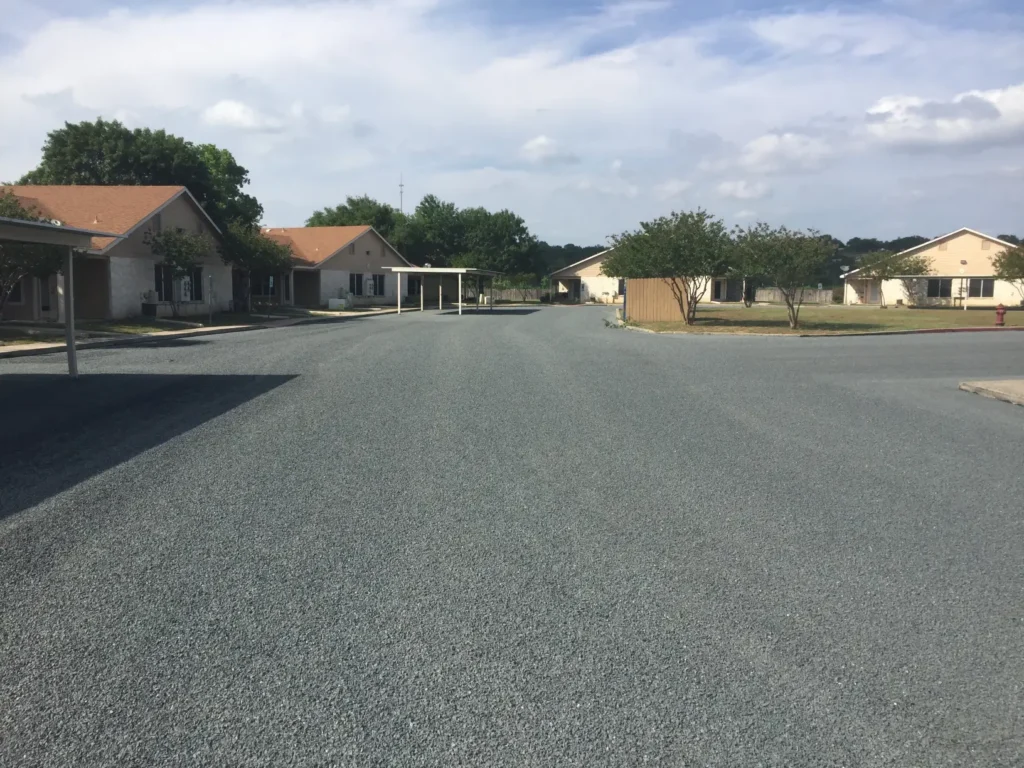
Reliable Chip Seal and Tar and Chip Road Paving in Bulverde, Texas
Chip seal, also called tar and chip paving or an oil road, is the surface type we get asked about more than anything else. For homeowners with long driveways, landowners with ranch access roads, and property managers who need a durable, all-weather surface without the cost of full-depth asphalt, chip seal is usually the right answer. We’ve been installing chip seal across Bulverde, Boerne, Kerrville, Fredericksburg, Bandera, and the surrounding Hill Country for four generations, and it accounts for the majority of the work we do.
The process is straightforward: we apply hot liquid asphalt to the prepared surface, then immediately embed crushed aggregate stone before the asphalt cools. The stone locks into the binder as it sets, creating a textured, permeable surface that grips well in wet conditions and holds up to Texas heat without the surface cracking that smooth asphalt develops over time. According to the Federal Highway Administration, chip seal is one of the most widely used pavement preservation and surface treatment methods in North America, a reflection of how well it performs relative to its cost when the application is right for the site. View all paving services See where we serve
Why Choose Chip Seal Paving in Central Texas?
Chip seal performs especially well in Central and South Texas conditions, where sun, caliche-based soils, and seasonal rain create a specific set of demands that smooth asphalt doesn’t always handle as well. Here’s why homeowners and landowners across our service area keep choosing it.
ALL-SURFACE DEPENDABILITY IN ALL CONDITIONS
Chip seal's embedded aggregate surface gives traction in wet conditions that smooth asphalt can't match, which matters on ranch driveways, steep grades, and rural roads that get slick in rain. The textured surface also reflects heat more effectively than smooth asphalt, which tends to soften and track during peak summer temperatures in Central Texas. For long driveways and rural roads that don't get daily maintenance attention, that weather resilience matters.
COMPATIBILITY WITH BULVERDE'S TERRAIN AND SOILS
The Hill Country's limestone base and rocky terrain provide excellent sub-grade stability for chip seal installations, which is part of why this surface type works so well in this region. On sites with clay soil or poor drainage, we address sub-base preparation first. Chip seal performs best when the base beneath it is stable and properly graded for drainage. That's a step we don't skip regardless of how simple the installation looks.
LOWER COST ACROSS THE LIFECYCLE
Chip seal typically costs 25 to 40 percent less than full-depth hot-mix asphalt for the same surface area. For long driveways measured in hundreds of feet, or ranch roads measured in miles, that cost difference is significant. Chip seal also doesn't require the same level of crack sealing and pothole repair that smooth asphalt does over time. A new seal layer every 7 to 10 years keeps the surface performing well without major reconstruction cost.
Our Tar And Chip Paving Services
CHIP SEAL DRIVEWAYS
Long residential driveways are our most common chip seal application. A 300-foot gravel driveway that turns to mud in every rain, or a smooth asphalt driveway that's cracking from root pressure and heat, is a job where chip seal delivers a long-lasting, low-maintenance surface at a price that makes sense. We handle driveway base grading, proper crown installation for drainage, and chip seal application in the same project, so the surface drains correctly from day one. Asphalt driveway paving
TAR AND CHIP ACRE ROADS
Multi-acre properties in the Hill Country and South Texas often have internal road systems that connect structures, gates, barns, and pasture areas. Chip seal is well-suited for these routes, durable enough for truck and equipment traffic, installed relatively quickly across large areas, and able to handle the grade changes common on rural Central Texas terrain. We grade and compact the base before installation and ensure drainage flows away from structures.
OIL ROADS ACROSS ACRES AND RANCH PROPERTIES
Oil roads, chip seal roads installed on ranch and agricultural land, need to hold up to vehicle traffic year-round without constant maintenance attention. A properly installed oil road on a prepared aggregate base can handle regular truck traffic and remain serviceable for 7 to 10 years before needing a reseal. We've built ranch access roads, perimeter roads, and internal property roads across the Hill Country for decades. Long, straight runs and wide curves are where chip seal really earns its reputation.
OIL ROAD PATCHES ACROSS VARIOUS SURFACES
Existing chip seal and oil roads that have developed failed sections don't always need full replacement. Patching, where we mill out the failed section, recompact the base if needed, and apply fresh asphalt and aggregate, can extend the life of the surrounding road for several more years at significantly lower cost. We assess the existing surface and base condition and give you an honest recommendation on whether patching makes sense or whether a full re-seal is the better investment. Asphalt crack repair and maintenance
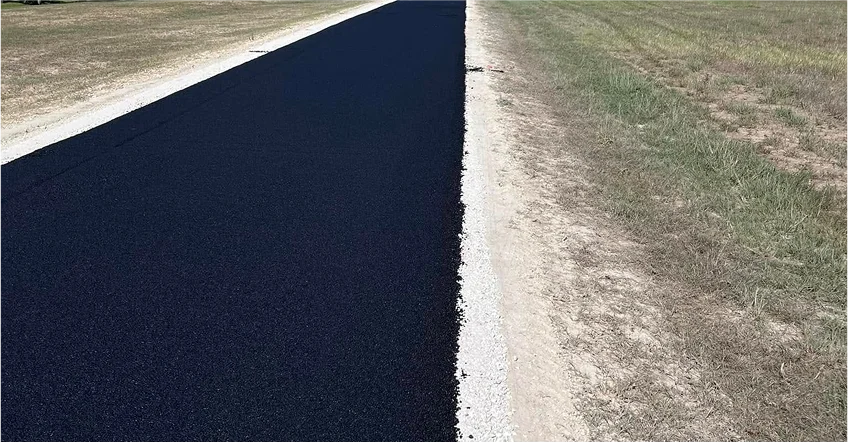
Comparing Chip Seal Vs Asphalt Paving
Choosing between chip seal and hot-mix asphalt comes down to your specific site, traffic volume, and budget. Here are the three categories that matter most when comparing the two.
COST
Chip seal typically costs 25 to 40 percent less than hot-mix asphalt for the same area, depending on base preparation requirements and chip aggregate selection. For long driveways, private roads, and rural acreage routes where total surface area is high, that cost gap is the deciding factor for most property owners. Hot-mix asphalt costs more upfront but produces a smoother, more finished surface, which is the right choice for high-traffic applications or properties where appearance is a priority.
DURABILITY
Both surfaces are durable when installed correctly over a prepared base. Hot-mix asphalt generally has a longer design lifespan for high-volume traffic, 15 to 25 years under proper maintenance. Chip seal surfaces on rural driveways and low-volume roads typically last 7 to 10 years before needing a new seal layer, which is a relatively minor cost. In high-heat environments like Central Texas, chip seal's aggregate surface handles thermal expansion better than smooth asphalt, which can soften and deform in sustained summer temperatures.
MAINTENANCE
Smooth asphalt requires crack sealing and periodic sealcoating to maintain its surface integrity, skipping maintenance accelerates deterioration significantly. Chip seal is more forgiving over time: the surface texture disguises minor surface wear, and the aggregate provides some natural drainage through the surface in light rain. Maintenance for chip seal is primarily a fresh seal layer every 7 to 10 years. For properties with miles of private road, that lower maintenance requirement is often the deciding factor.
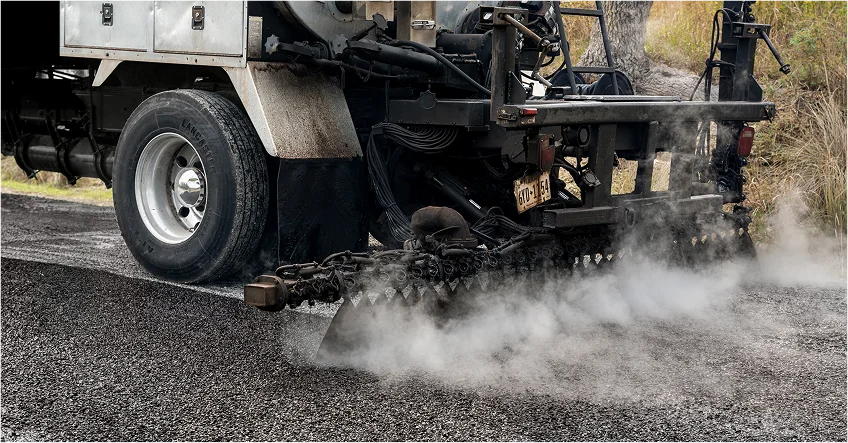
Seasonal Challenges in Texas and How We Handle Them
Texas weather is hard on pavement. Here’s how each season affects chip seal surfaces and what we account for during installation and maintenance.
SUMMER
Central Texas summers push surface temperatures on paved roads well above air temperature, often exceeding 140 degrees Fahrenheit on smooth asphalt surfaces in direct sun. Chip seal handles this better than smooth asphalt because the aggregate surface reflects heat and the binder is not exposed at the surface the same way it is on a fresh smooth asphalt installation. That said, chip seal installations should not be attempted during sustained extreme heat, the asphalt binder sets too quickly in high temperatures, reducing the bond between binder and aggregate. We schedule installations during appropriate temperature windows.
Fall
Fall is one of the best times of year for chip seal installation in Central and South Texas. Temperatures are moderate, the binder has adequate working time before setting, and the installed surface has time to fully cure before winter temperature fluctuations. If you're planning a driveway or ranch road installation, fall scheduling typically produces the best cure conditions and means you go into winter with a fully set surface.
Winter
Chip seal in Central Texas is relatively freeze-resistant compared to regions with hard winters, but temperature drops still affect performance. Cold temperatures during installation prevent the binder from flowing and penetrating the aggregate properly, which is why we do not install chip seal when temperatures are below approximately 50 degrees Fahrenheit or when rain is forecast. Existing chip seal surfaces perform fine through mild winters; hard freezes followed by thaw cycles can accelerate surface wear near existing cracks.
Spring
Spring rain in Central and South Texas can come in significant volume over short periods. Properly crowned and drained chip seal surfaces shed water effectively, the aggregate texture actually moves surface water off the road faster than smooth asphalt in moderate rain. Poorly drained surfaces, however, will pool water and eventually soften the base below. Spring is also when we see the aftermath of winter damage on surfaces that weren't properly prepared, which is a good time to assess whether patching or a fresh seal layer is needed.
Why C. Brooks Paving Is Trusted Across Texas

A+ BBB Accredited
Accredited with the Better Business Bureau and maintaining an A+ rating since our founding.
Owner on Every Job Site
Courtnay Brooks is present at every project. You’re not handing your property over to a subcontractor.
All Work Guaranteed in Writing
Every estimate and every job is documented. No verbal promises. No hidden charges.
State-of-the-Art Equipment
We run Etnyre, Bear Cat, and Leeboy equipment, some of the best chip seal and asphalt machinery available in the region.

Frequently Asked Questions
How long does chip seal last on a driveway or ranch road?
A properly installed chip seal surface over a prepared aggregate base typically lasts 7 to 10 years before needing a new seal layer. That lifespan depends on traffic volume, base quality, and how well the surface drains. Heavy truck traffic and poor drainage shorten it. A new seal layer at the end of the cycle is a relatively low-cost maintenance step compared to full-depth reconstruction, which is one of the reasons chip seal makes sense for long rural driveways and ranch roads where total square footage is high.
Is chip seal paving a good fit for long driveways?
Yes, long private driveways are one of the most common applications we do. Chip seal covers large surface areas at a lower cost than hot-mix asphalt, holds up well to vehicle traffic, and provides a stable, all-weather surface that eliminates the mud, dust, and rut problems that gravel driveways create. For driveways over 200 feet, the cost difference between chip seal and smooth asphalt is typically significant enough that chip seal is the right choice unless appearance is the primary concern.
Is chip seal the same thing as a tar and chip driveway or an oil road?
Yes. “Chip seal,” “tar and chip,” and “oil road” all describe the same surface treatment, hot liquid asphalt applied to a prepared base, with crushed aggregate stone embedded into the binder before it sets. The terminology varies by region. In the Hill Country and across rural Central and South Texas, “oil road” is the most common term. The process and result are the same regardless of what you call it.
How much does chip seal paving cost compared to asphalt?
Chip seal typically costs 25 to 40 percent less than hot-mix asphalt for the same surface area. The exact price depends on your site’s base preparation requirements, the length and width of the road or driveway, access conditions, and the aggregate type selected. We provide written estimates that cover all of those variables before any work begins, no verbal quotes, no surprises.
Proudly Serving South & Central Texas
- We proudly serve: